
Basement Floor Epoxy · Farmington Hills

Basement Floor Epoxy in Farmington Hills, MI

We read your slab for moisture before anything else, match the coating to that number, then seal the basement floor epoxy under a clear polyaspartic that holds through humid summers.

1-2 days installs · typical timeline
Free Quote

Free Basement Floor Epoxy quote.

We reply within 1 business hour. No spam, ever.

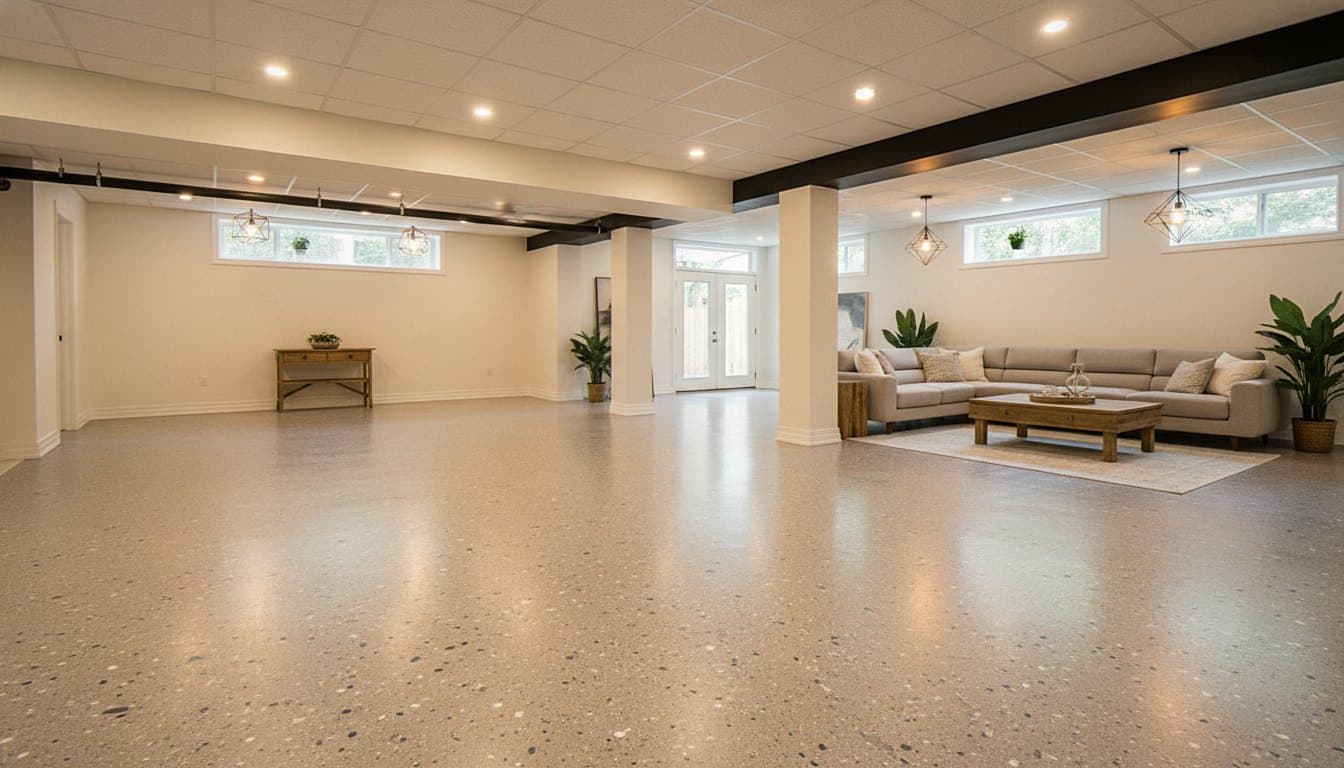
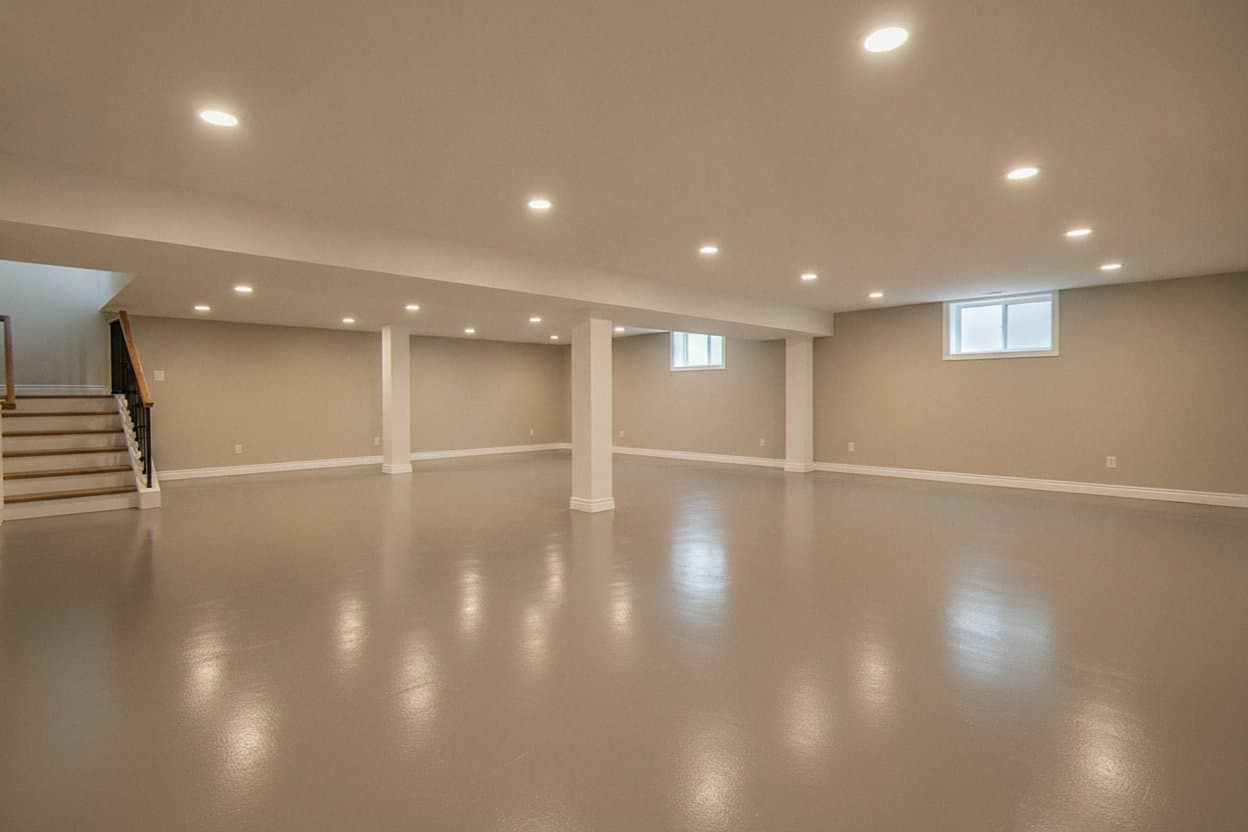
Finished basement in warm grey epoxy.
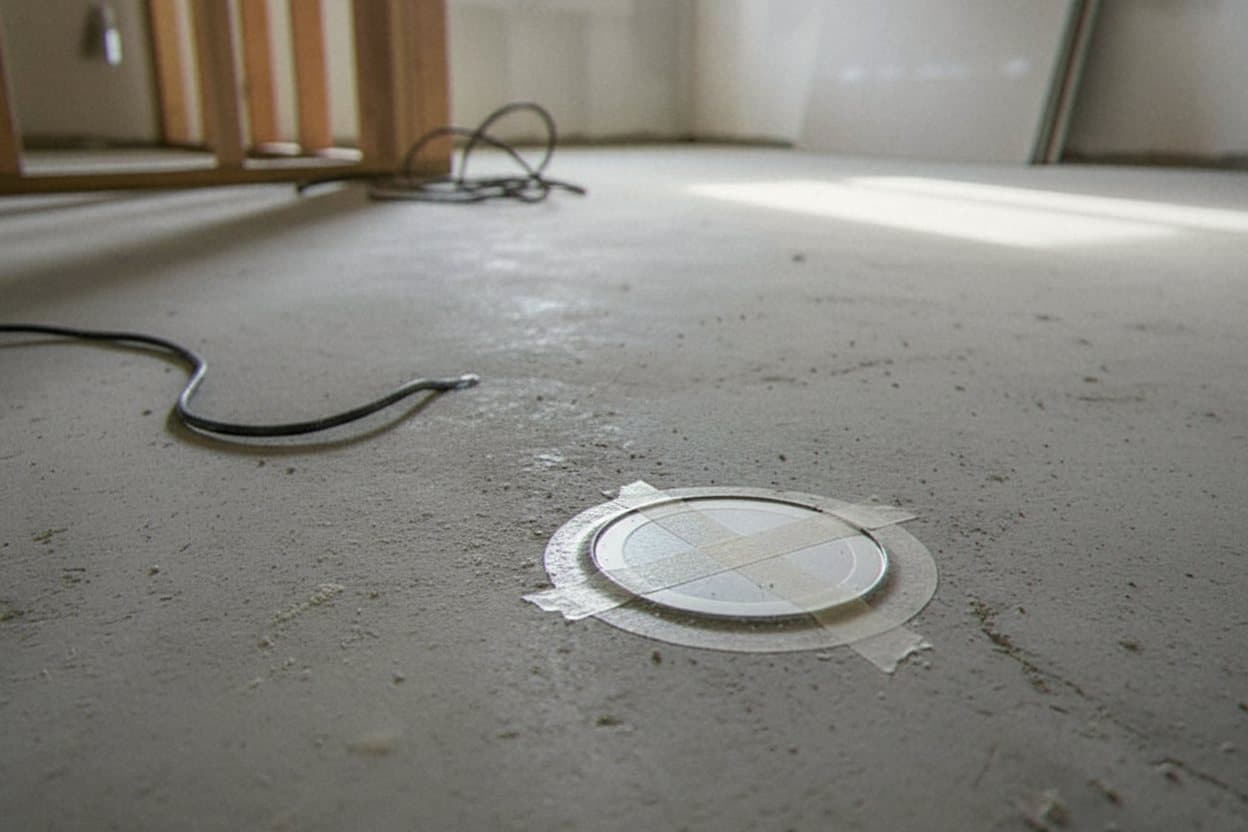
Calcium chloride test disc on concrete.
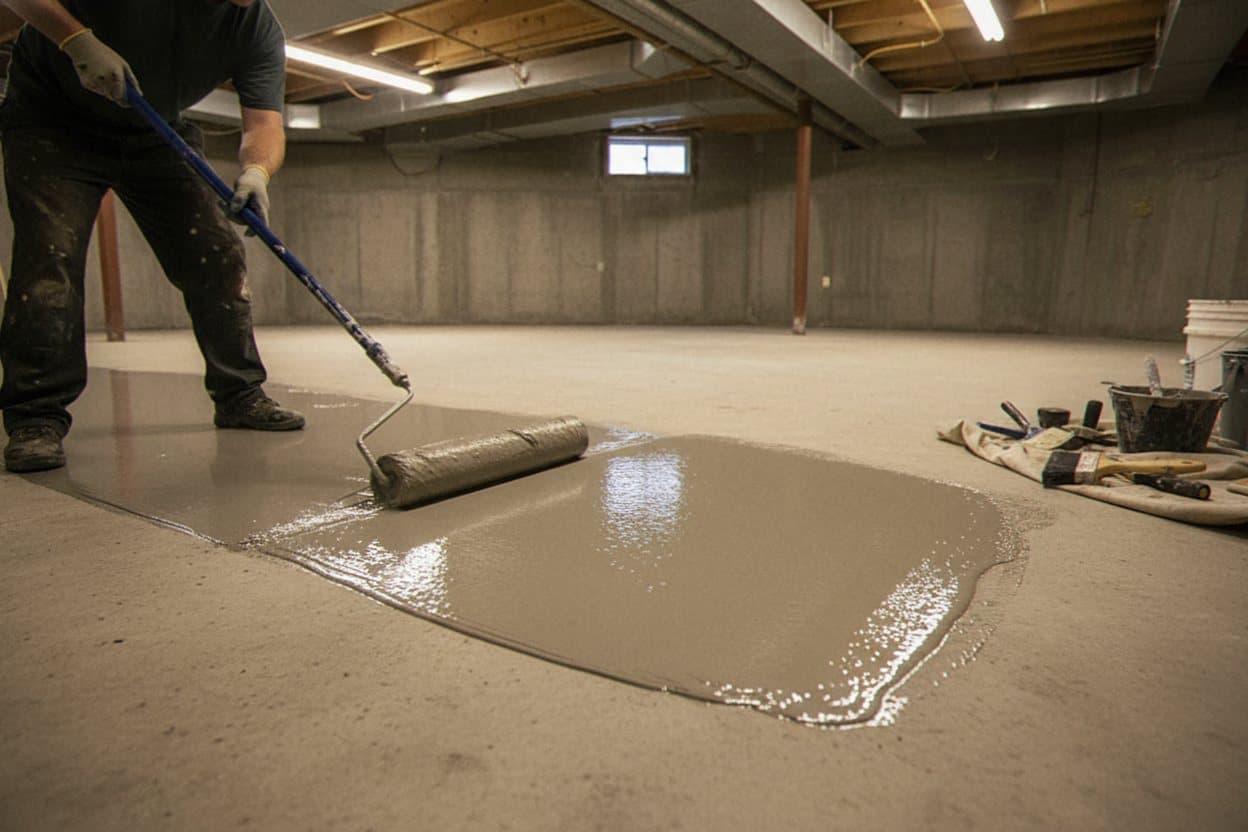
Epoxy base coat applied with roller.
What we install

Why basement floors fail and how ours hold

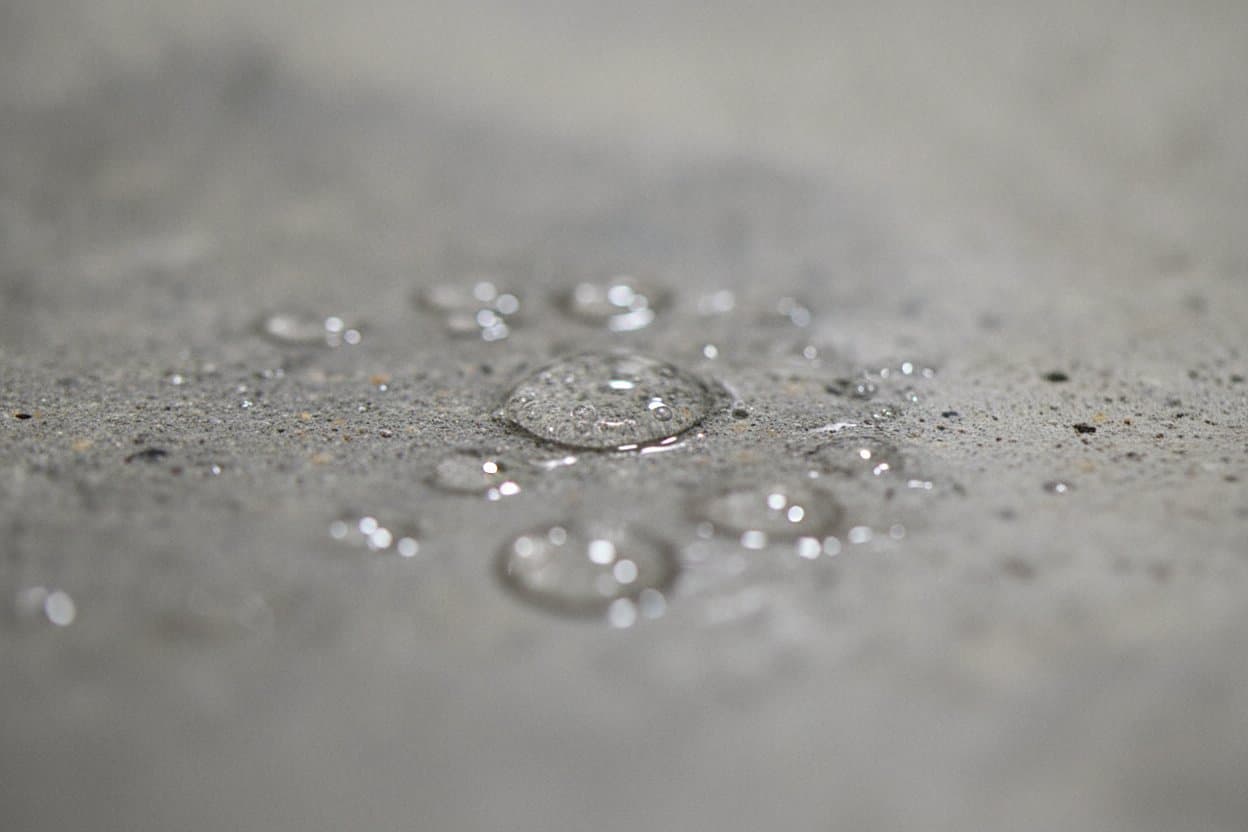
Good basement floor epoxy in Farmington Hills begins with the water you never see. The slab sits on heavy clay soil that traps groundwater against the foundation, and that water rises through the concrete as vapor all year long. A coating laid over it without a plan can bubble and blister the first humid summer. Most failed basement floors around here never wore out. They let go because the crew skipped the moisture read and coated anyway. We do the opposite. We measure what the slab pushes up, then build to that number. The same care goes into every garage floor epoxy job we pour, and on a basement it matters even more.

The system goes down in four coats over a slab we open with a diamond grinder. That grinder cuts a rough tooth into the concrete, so the first coat keys in and grips hard against the surface. The moisture number picks the primer, the coat that seals the vapor down before any color goes on. Over that we roll a bright base, scatter a light bed of flake for grip and depth, and seal it under a clear polyaspartic top. Each coat carries its own cure window, and the next cannot land until the last has set. We never rush that. Hit every window and the floor cures as one solid sheet.

  • We read the slab for moisture before we pick a single coat.
  • A bright base coat throws daylight back into a room with little of its own.
  • The polyaspartic top grips, so furniture and gym gear never slide.
  • Walk on the floor the evening we seal it.
  • Fans and a dehumidifier carry the coating odor outside, so the basement clears fast.
A basement floor lives or dies on the moisture read. We take that number first, every job, before a drop of resin.

We coat basement floors across Farmington Hills and the rest of Oakland County, so we plan each job around the ground we actually dig into. The clay under this part of Michigan stays damp, and it pushes more vapor up through a basement slab than a sandy lot ever would. We test every time. Even when the floor looks bone dry, the meter goes down. When you call, you reach the same crew that shows up to grind, prime, and seal. You talk to the people doing the work, you get a firm date, and you get the kind of epoxy flooring Farmington Hills owners call back about.

Want a basement floor that stays dry and bright? Call or send a few photos of the slab, and we will set a date and walk you through the plan.
Materials

Why a basement system differs from a garage

A basement floor is not a garage floor in a lighter shade. The two slabs fight different enemies, so they get different systems. A garage takes hot tires and road salt from above. A basement takes moisture from below, all day, every season. That moves the most important coat down to the primer sitting on bare concrete. We pick that primer from the moisture read, never from habit, because the wrong one traps vapor and lifts the whole floor. The color on top is the simple part.

The look is different too, and on purpose. Down here we lean on a bright base coat that bounces light around a space with no windows to speak of. Then we add just a light scatter of flake, not the dense throw a garage gets, enough for grip and a touch of depth underfoot. The clear polyaspartic top seals the humidity out and stays clear where a window well lets the sun in. Put together, a basement floor epoxy system reads softer and brighter than a garage, but the coat doing the real work still hides against the slab.

  • The moisture number picks the primer, not the installer's gut feel.
  • A bright base coat lifts a dim room instead of darkening it.
  • A light flake scatter adds grip without the dense garage pattern.
  • The polyaspartic top seals humidity out and stays clear by a window well.
Primer layer hardening on basement slab.
Basement room with sealed epoxy floor.
What about the alternatives?

Other basement floors and how they hold

People finish a basement floor a dozen ways, and most lose a slow fight with the moisture rising through the slab. Some peel in one wet season. Some trap the damp and turn musty. Here is how the common picks hold up in a Farmington Hills basement.

Concrete paint or stain

The cheapest cosmetic pass. It lifts at the walls and floor drains inside one wet season.

Skip

Peel and stick vinyl plank

The glue gives up once vapor reaches it, so the planks curl and lift at the seams.

Skip

Carpet tile squares

Warm and quick to lay, but they hold damp against the slab and can turn musty over time.

Acceptable

Engineered wood on sleepers

Wood and a damp basement slab do not mix. The boards cup the first time the floor sees real moisture.

Skip

Epoxy primer matched to the moisture, sealed with polyaspartic

A primer keyed to the read seals the vapor down, then a clear top takes the daily wear. This is our pick.

Recommended
How it goes

From quote to walk-on, fast.

01

Free walk-through

02

Prep the slab

03

Coat and broadcast

04

Polyaspartic topcoat

Before you book

Questions to ask before a basement quote

Before you sign with anyone on a basement floor, these questions tell you whether the coating is going on right.

Does the quote include the actual moisture reading?
Ours does. We set a calcium chloride disc on the slab, seal it for the test window, and read how much moisture rises through the concrete. That number picks the primer. A quote written without it is a guess. On a basement slab, a guess is exactly how a floor ends up lifting a year later.
How long will the cure smell hang around the house?
Not long, because we plan for it. We run exhaust fans to push the air outside and set dehumidifiers to pull the damp down while the coats cure. Most of the smell is gone by the time we load the truck. What little lingers clears within a day. We tape off the basement door from the rest of the house while we work.
What if there is standing water or an old failed coating?
We handle both before a new coat goes down. Standing water means we find where it gets in and sort the drainage first, because no coating beats a live leak. An old failed coating gets ground all the way back to clean concrete. Then we test the bare slab fresh and build on a surface we trust.
How do you keep grinding dust out of the rest of the house?
Diamond grinding throws fine concrete dust. We run the grinder with a vacuum shroud right at the head, vent it into a HEPA filter, and seal the basement door with plastic sheeting and tape during the dusty steps. Skip that containment and the dust rides the furnace return and settles on every surface upstairs. We would not do it that way.
When can the furniture come back down?
You can walk on the floor the evening we seal it. Furniture and shelving move back the next day, once the polyaspartic has cured hard. We give you the exact times for your own job before we start, so you can plan the move around them.
Aftercare

Keeping a basement floor bright for years

A finished basement floor asks for very little, and most of the upkeep is just keeping grit off it. Loose dirt drags underfoot like sandpaper, so sweep or vacuum it when it builds up. Wipe spills before they sit and leave a mark. Watch the spots near a window well or a floor drain, where damp likes to creep in. Do that much and the floor stays bright a long time.

  • Sweep or vacuum weekly. Fine grit acts like sandpaper if it sits.
  • Wipe spills soon, before they dry and leave a stain.
  • Watch the floor near window wells and drains for creeping damp.
  • Wash a couple times a year with a soft mop and mild soap.
  • Slip felt pads under furniture and gym gear so they do not gouge.
Finished basement in warm grey epoxy.
FAQ

Basement floor questions we hear most

Do you do the work yourselves, or hand it to a sub?
We do it ourselves. No middleman, no sub. The same crew that walks your slab, reads the concrete, and maps the prep plan is the crew that grinds it, lays each coat, and cleans up before the day ends. When you call, you reach the people holding the grinder, not a dispatcher. One clear date. One crew from the first look to the last inspection.
What separates epoxy from polyaspartic, in practice?
Two different materials, two different jobs. Epoxy is the thick, pigmented base that bonds to the bare concrete after grinding and carries the whole coating system. Without that primer laid on an open slab, nothing above it sticks for long. Polyaspartic goes on top. It is the hard, clear finish that shrugs off road salt, hot tires, and the daily abuse a working garage floor takes every winter. We run both on most floors.
How are coating jobs typically priced in this market?
It depends on the slab. We walk the space first, then price it, because the square footage, the condition of the concrete, and which coating system you choose all change what the job costs. A flat, clean garage with no cracks is straightforward. A basement that needs moisture testing, crack repair, and a specialty primer before any color goes down is a different scope entirely. We hand you a written quote before any work starts. No guessing.
Are winter installs realistic in southeast Michigan?
Yes. All of the work happens inside your garage, not outside, so the outdoor temperature does not matter as long as we can hold the cure temperature steady in the enclosed space. We bring heaters. A January install cures just as hard as a summer job when the ambient air stays in the right range. Bare cold concrete with no heat source is the only thing that stops a floor from setting right.
Will the floor pick up or stain under hot tires?
Not with the right top coat. Hot tires pull at a clear layer that has not fully cured and lift it right off the base, and that is how most cheap epoxy jobs fail by year two. We seal every floor under polyaspartic, which cures hard and stays hard in the heat coming off a tire fresh from the road. It wipes clean. Oil, salt, and brake fluid sit on the surface instead of soaking in.
Ready when you are

Ready for a real Farmington Hills floor?

Send a few photos or book a free 15-minute on-site walk-through. A fixed written quote within one business day.

Get a free quoteCall (947) 224-7175
CallFree Quote