
Metallic Epoxy · Farmington Hills

Metallic Epoxy Floors in Farmington Hills, MI

We pour the metallic epoxy, hand swirl the mica while it is wet, then seal it under polyaspartic. You walk on it in about two days.

2 days installs · typical timeline
Free Quote

Free Metallic Epoxy quote.

We reply within 1 business hour. No spam, ever.

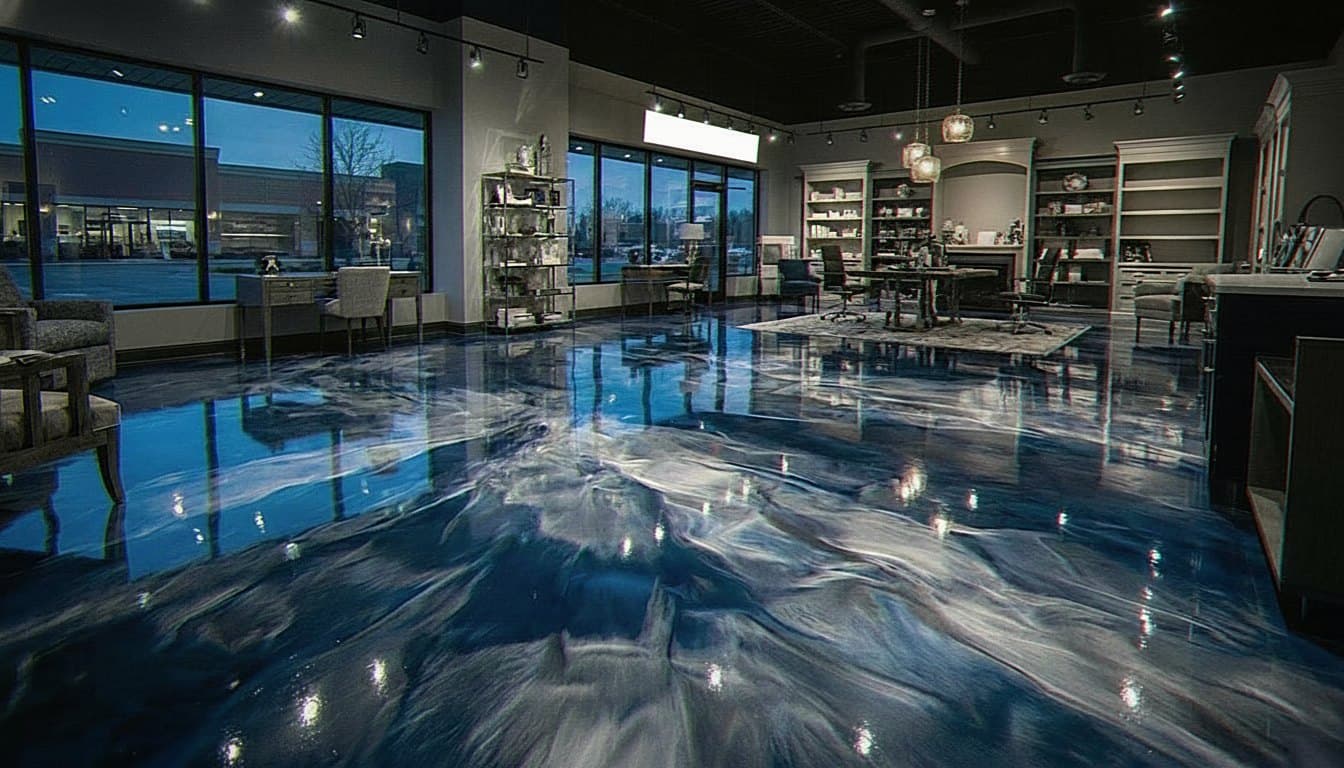
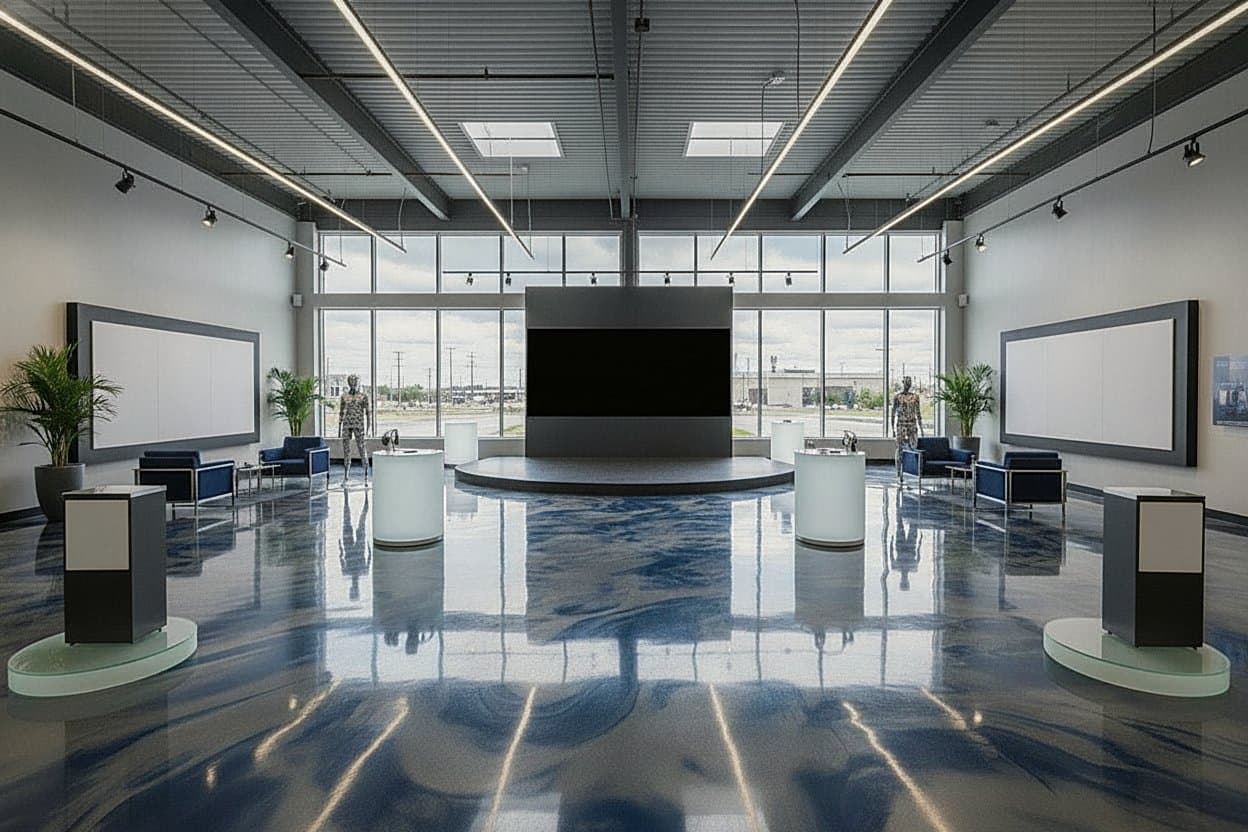
Metallic epoxy floor with marbled swirl.
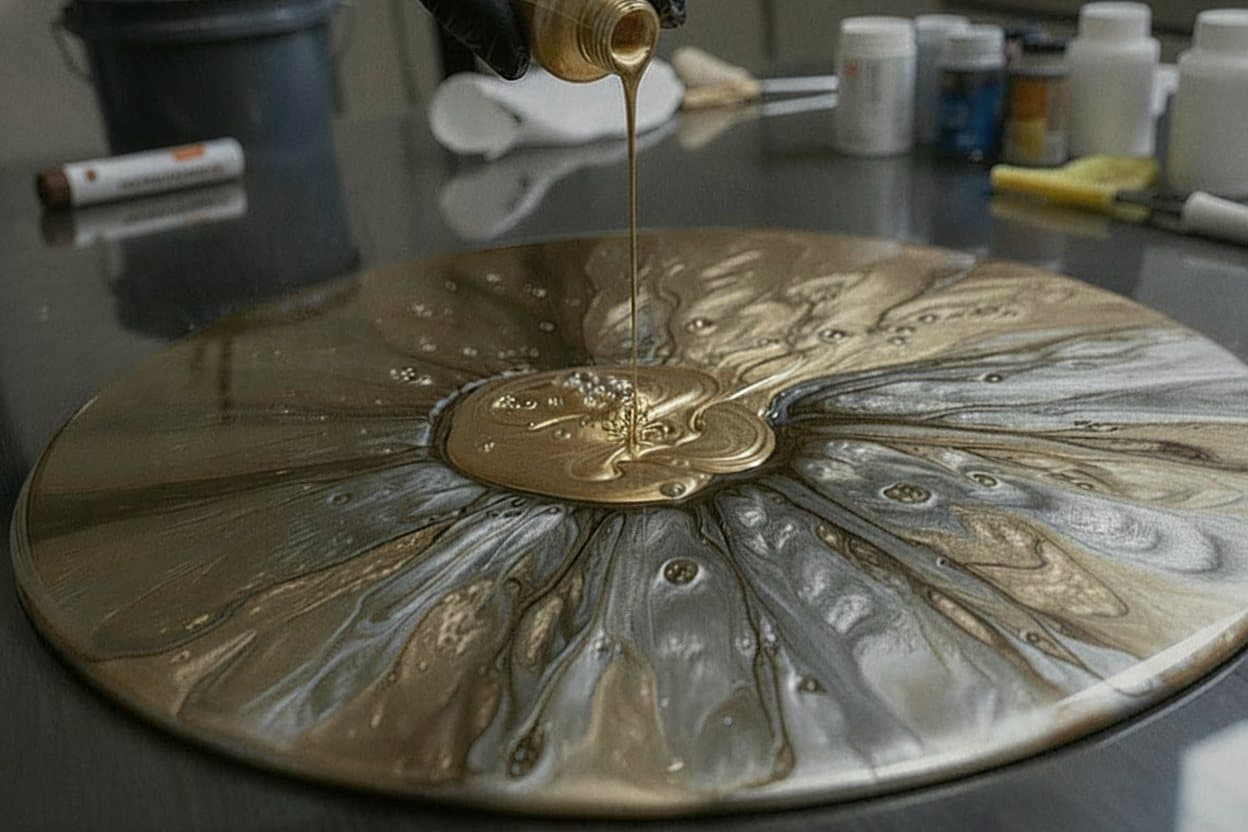
Metallic pigment poured into self-leveling.
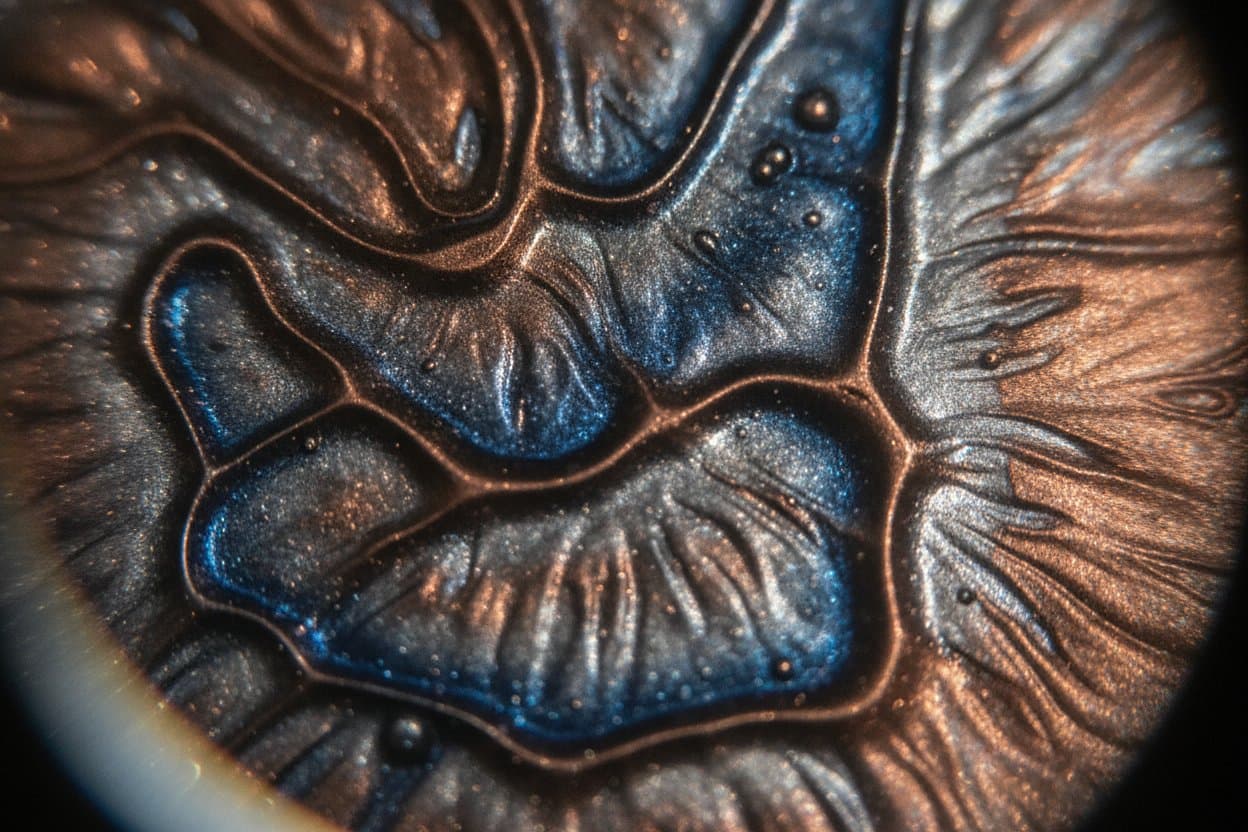
Cured metallic epoxy with three-dimensional effect.
What we install

What a metallic floor actually is, on the slab

Most floors in Farmington Hills are built to take a beating, not to look like anything. A metallic epoxy floor flips that. We blend mineral mica into clear resin and move it by hand while it is wet, so the color pools and drifts into a marbled finish with real depth. No two floors come out the same, and that is the whole point. People reach for this when a plain gray slab feels too flat for the room, like a finished basement bar, a show garage, or a front entry. If you only want grip and easy cleanup, decorative flake does that with less work, and we will tell you so.

The build runs over two days, because the look takes time to set right. First we grind the slab open with a diamond machine so the coating digs in and holds. Then we lay a base coat in the main color. While that base is still wet, we pour the metallic epoxy resin and pull it across the floor with a trowel and a roller, working the mica until the swirl reads the way you want. The next day a clear polyaspartic topcoat locks it all in and gives the floor its gloss and its strength.

  • Common blends here: copper on slate, polished nickel, storm blue, warm walnut.
  • Sealed under polyaspartic. Same chemical and daylight toughness as any other system.
  • Every floor is one of a kind, since the swirl is poured by hand.
  • Right answer for a finished basement bar, a polished garage, a commercial entry foyer.
  • We work indoors, so a heater holds the cure steady through a cold week.
Pour two floors from the same buckets and you still get two different floors. That is the point.

We pour metallic epoxy floors right here in Farmington Hills and across Oakland County, so we plan the work around the room and the season. A swirl floor needs a steady hand and a steady temperature, and our cold runs long, so we bring heaters and hold the cure where it needs to be. You pick the color blend with us in person, in the real room light, before we start. When you call, you get the same crew that grinds, pours, and swirls the floor. You deal with the people doing the work, and you get a clear date.

If you want a floor that turns heads instead of just taking abuse, metallic epoxy is the build to ask about. Call or send a few photos of the room, and we will walk you through the color options and set a date. We do the whole job ourselves, from the grind to the final coat.
Materials

How the metallic layer is actually built

A metallic epoxy floor is really three layers doing three jobs. The base coat carries the main color and builds the body of the floor. The metallic coat is clear resin loaded with mica, a fine mineral powder that catches light from different angles. When we move that wet resin around, the mica drifts and settles into the marbled pattern, so the floor looks like it has depth even though it is dead flat to the touch.

The clear topcoat is what makes the rest last. We seal the metallic layer under polyaspartic, the same hard coat we use on a garage or a basement floor. It cures fast, shrugs off scuffs and cleaners, and locks the swirl in so it cannot wear off. Without that topcoat the metallic layer would scratch and dull in a season. With it, the depth you see on day one is the depth you keep.

  • Mineral mica suspended in clear resin, moved by hand during the wet window.
  • The base color sets the mood, the mica sets the movement and the shine.
  • The 3D depth only reads right under a clear polyaspartic topcoat.
  • Built over two days, since the swirl and topcoat each need a day.
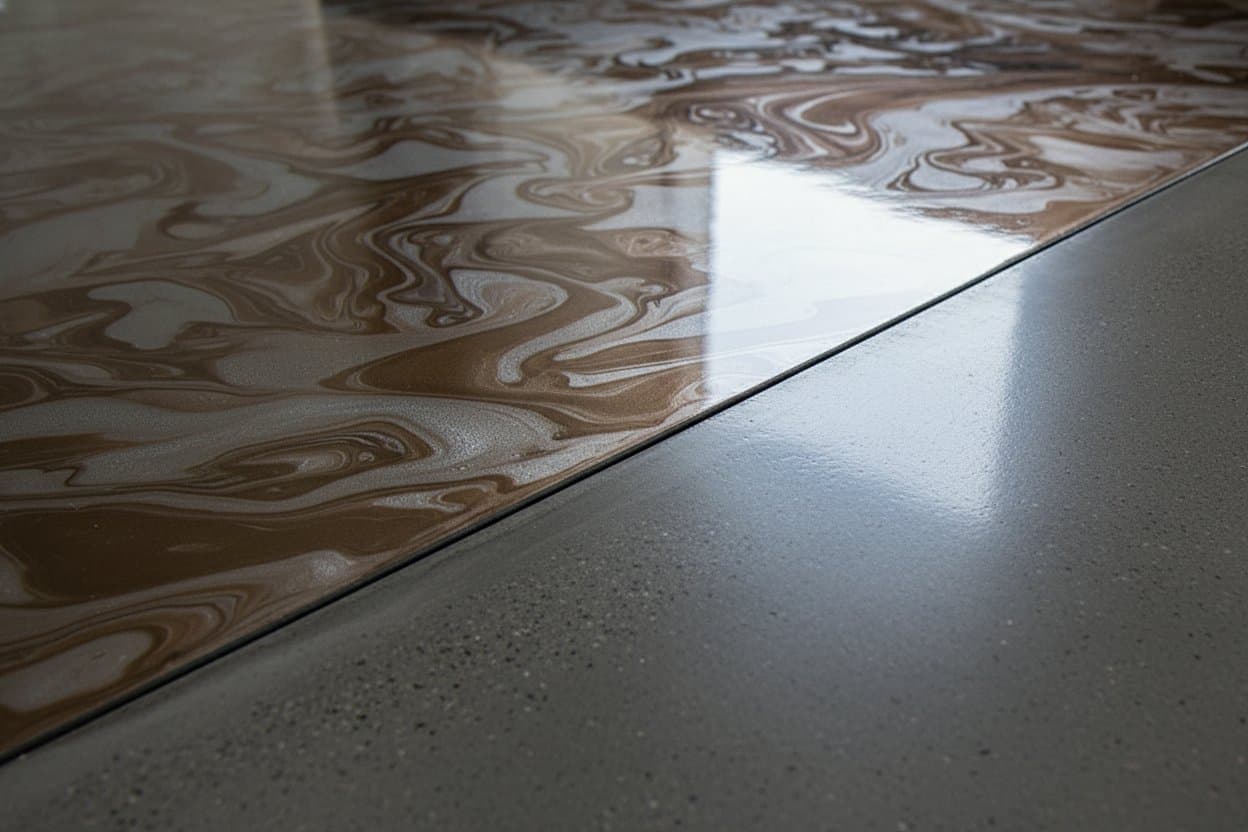
Metallic epoxy bordering polished concrete.
Commercial space with metallic epoxy floor.
What about the alternatives?

Metallic versus the other designer floor options

A few floors can give a room a high end look, and metallic epoxy is one of them. Some are concrete on its own, some are a poured finish like ours, and they read very differently in a room. Here is how the common picks compare for a Farmington Hills space.

Acid stained concrete

It soaks color into the slab for a mottled look, but the tones are limited and it fades over time.

Acceptable

Polished concrete with dyes

Grinding and dye leave a clean, low upkeep floor, though the color stays subtle and flat with no real depth.

Recommended

Terrazzo (epoxy version)

Chips set in resin can look sharp, but it is a bigger job than most homes need and the style runs formal.

Acceptable

Full decorative flake

Vinyl chips give grip and hide dirt, the practical pick for a working garage, just not a designer look.

Recommended

Metallic epoxy and polyaspartic

A poured swirl sealed under a hard coat. This is the build for a floor with real depth that still wears well.

Recommended
How it goes

From quote to walk-on, fast.

01

Free walk-through

02

Prep the slab

03

Coat and broadcast

04

Polyaspartic topcoat

Before you book

Questions to push on before booking the install

Before you book a metallic epoxy floor with anyone, here are the questions that tell you whether it will come out right.

Are real samples reviewed in the actual room's lighting?
Yes. We bring real sample boards and look at them in your own room, because metallic reads completely different under daylight than under a shop light or a screen. The same blend can look like warm copper by a window and cool bronze in a basement. We pick the colors where the floor will actually live, so what you approve is what you get.
How much does it vary from one floor to the next?
A lot, and that is by design. Because we move the resin by hand, every pour lands a little different, so your floor is one of a kind. We can steer it toward calm and even or bold and dramatic, but we cannot make two floors match exactly. If you want a uniform, repeatable look, flake or solid color is the better call, and we will say so.
If a scratch or gouge happens, what is the repair plan?
A deep gouge in a metallic floor is harder to hide than on a flake floor, since the swirl is unique to that spot. For light scuffs, the polyaspartic topcoat usually buffs back to gloss. For a real gouge, we feather in new resin and reswirl the patch to blend, then recoat the area. We walk you through what a fix looks like before you commit.
Does it work in a humid Farmington Hills basement?
Yes, as long as we read the slab first. A basement floor can push moisture up from the ground, and that vapor can lift any coating if you ignore it. We test the slab for moisture before we pour, and when the reading runs high we prime with a vapor barrier built for damp concrete. Done that way, a metallic epoxy floor holds fine in a Farmington Hills basement.
How does the color hold up under daylight?
The mineral pigments we use are made to hold their color, so the floor will not yellow or wash out the way a cheap dye can. The clear topcoat blocks most of the wear that dulls a finish over time. In a room with strong sun, we can add extra coats for more cover. The depth and shine you see at the start are what stay.
Aftercare

Keeping the depth visible across the years

A metallic epoxy floor is easy to keep up, but the deep gloss does show every speck, so a quick routine keeps it looking sharp. Grit is the main enemy, since fine sand drags across the surface and leaves tiny scratches that catch the light. Sweep or dust mop often, wipe spills before they sit, and skip anything harsh or scratchy. Do that and the swirl stays bright for years.

  • Sweep once a week. The deeper the gloss, the more each micro scratch shows.
  • Damp mop once a month with a pH neutral product. Skip abrasive scrub pads.
  • Felt pads under chair legs, weight bench feet, and anything dragged across the surface.
  • Wipe up oil, wine, and spills soon, before they dry on the gloss.
  • Rinse road salt off in winter if the floor sits in a garage.
Metallic epoxy floor with marbled swirl.
FAQ

Frequent metallic epoxy questions

Do you do the work yourselves, or hand it to a sub?
We do it ourselves. No middleman, no sub. The same crew that walks your slab, reads the concrete, and maps the prep plan is the crew that grinds it, lays each coat, and cleans up before the day ends. When you call, you reach the people holding the grinder, not a dispatcher. One clear date. One crew from the first look to the last inspection.
What separates epoxy from polyaspartic, in practice?
Two different materials, two different jobs. Epoxy is the thick, pigmented base that bonds to the bare concrete after grinding and carries the whole coating system. Without that primer laid on an open slab, nothing above it sticks for long. Polyaspartic goes on top. It is the hard, clear finish that shrugs off road salt, hot tires, and the daily abuse a working garage floor takes every winter. We run both on most floors.
How are coating jobs typically priced in this market?
It depends on the slab. We walk the space first, then price it, because the square footage, the condition of the concrete, and which coating system you choose all change what the job costs. A flat, clean garage with no cracks is straightforward. A basement that needs moisture testing, crack repair, and a specialty primer before any color goes down is a different scope entirely. We hand you a written quote before any work starts. No guessing.
Are winter installs realistic in southeast Michigan?
Yes. All of the work happens inside your garage, not outside, so the outdoor temperature does not matter as long as we can hold the cure temperature steady in the enclosed space. We bring heaters. A January install cures just as hard as a summer job when the ambient air stays in the right range. Bare cold concrete with no heat source is the only thing that stops a floor from setting right.
Will the floor pick up or stain under hot tires?
Not with the right top coat. Hot tires pull at a clear layer that has not fully cured and lift it right off the base, and that is how most cheap epoxy jobs fail by year two. We seal every floor under polyaspartic, which cures hard and stays hard in the heat coming off a tire fresh from the road. It wipes clean. Oil, salt, and brake fluid sit on the surface instead of soaking in.
Ready when you are

Ready for a real Farmington Hills floor?

Send a few photos or book a free 15-minute on-site walk-through. A fixed written quote within one business day.

Get a free quoteCall (947) 224-7175
CallFree Quote