
Decorative Flake Epoxy · Farmington Hills

Decorative Flake and Chip Epoxy Floors in Farmington Hills, MI

We broadcast vinyl flake into a wet epoxy base, seal it under clear polyaspartic, and you park on the floor about a day later.

1 day installs · typical timeline
Free Quote

Free Decorative Flake Epoxy quote.

We reply within 1 business hour. No spam, ever.

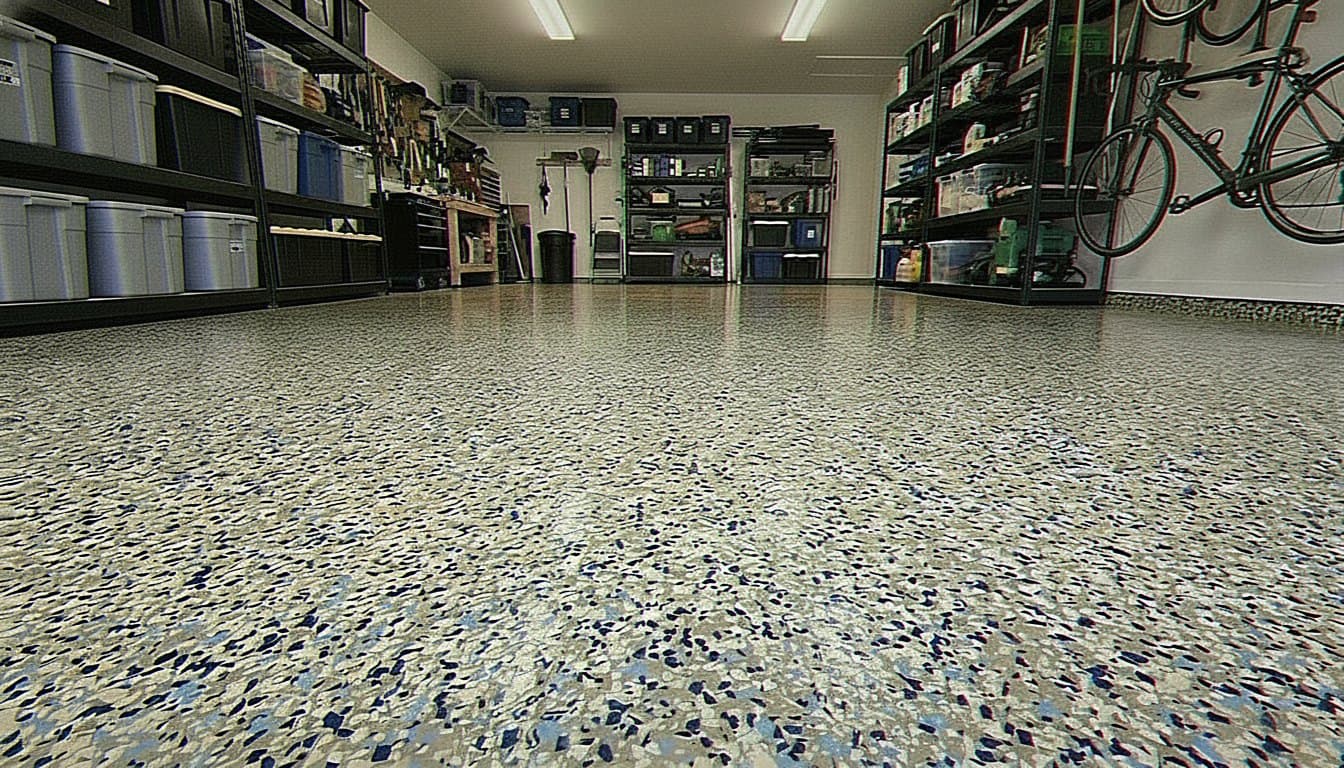
Dense charcoal vinyl flake epoxy finish.
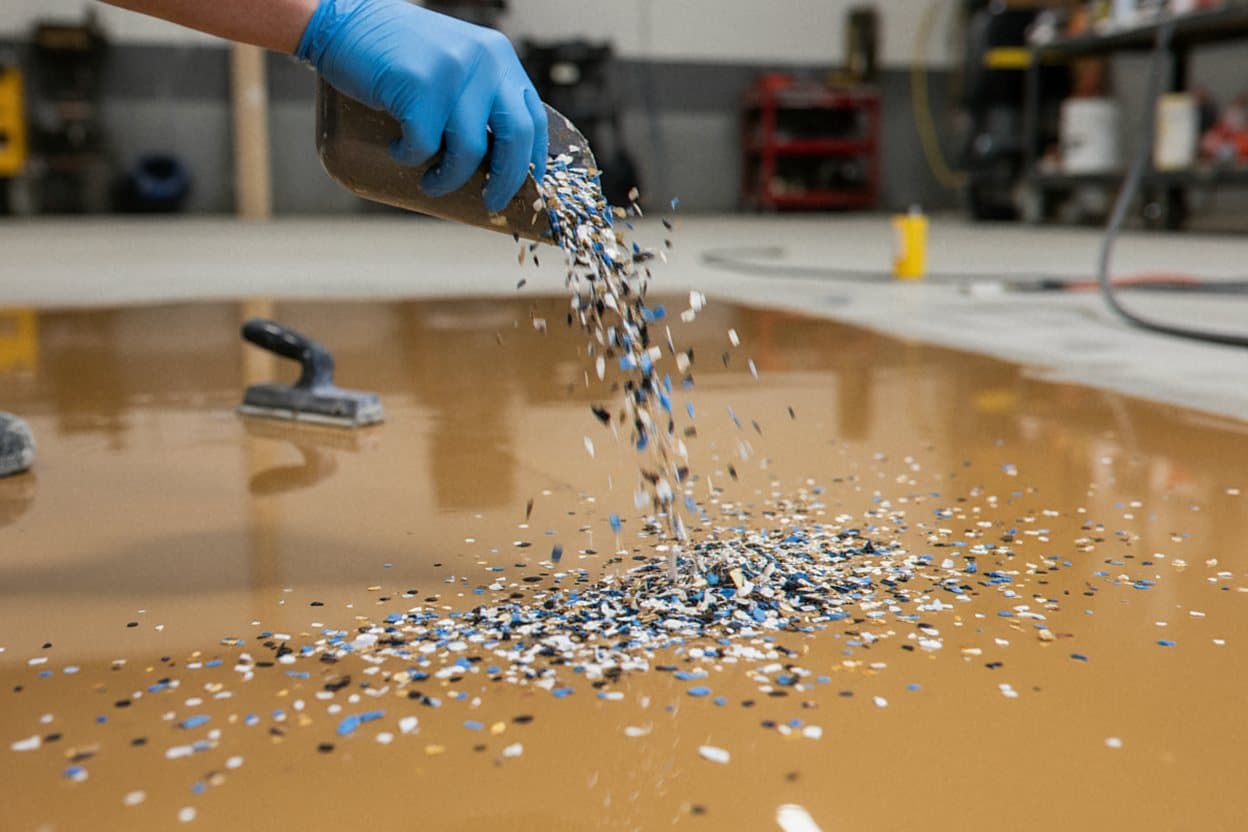
Vinyl flakes broadcast over wet epoxy.
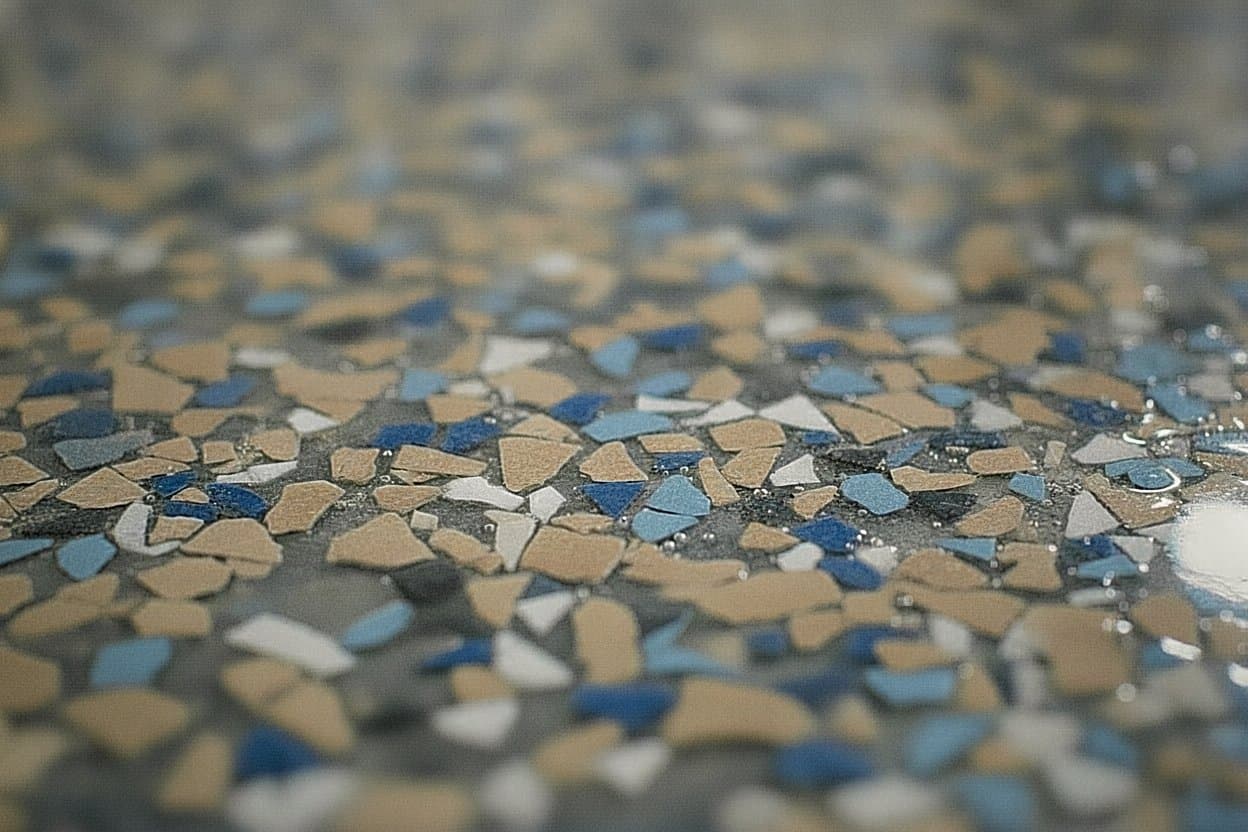
Thick flake layer under clear topcoat.
What we install

Why most Farmington Hills garages end up with flake

Most garage floors in Farmington Hills start as bare gray concrete that stains the first time oil drips on it. Decorative flake epoxy is the fix most owners here land on, and it is the look you picture when you think of a finished garage. We grind the slab, roll a colored base, and throw vinyl chips across it until the floor stops taking more. The flake does two jobs at once. It hides the scuffs and tire marks a working garage collects, and it adds grip underfoot when boots track in snow. When you weigh the epoxy flooring Farmington Hills crews offer, flake is the one that looks good and works hard.

The build is four coats over a slab we open with a diamond grinder. First a primer soaks into the bare concrete and gives the next coat something to grab. Then we roll a pigmented base, and while it is still wet we broadcast the flake by hand across the whole floor. We keep throwing until the wet base will not hold another chip, which is what gives the floor full, even coverage instead of a thin speckle. The next morning we scrape off the loose excess and seal the cured layer under a clear polyaspartic topcoat. Each coat has to cure inside its own window before the next one goes down.

  • Throw continues until the wet base rejects more flake. Full coverage, no pebble look.
  • Hides scuffs, tire ghosts, hairline cracks, and the small flaws every old garage has.
  • Texture adds grip when boots track in salt brine in late February.
  • You pick the chip blend with us in your own garage light before we start.
  • A garage sized for two cars finishes the install in one working day.
Throw the chips until the floor refuses more. That full coverage is what tells a real flake job from a thin one.

We coat flake floors right here in Farmington Hills and across Oakland County, so we plan each job around the weather we actually get. The cold runs long here, and the salt season runs longer. The work happens indoors, so we bring heaters to hold the cure steady through a January install while snow piles up outside. You pick the chip blend in your own garage light before we start, because color reads different there than on a screen. When you call, you reach the same crew that shows up to grind, roll, and broadcast the floor. You deal with the people doing the work, and you get a clear date.

Want a garage floor that hides the mess and grips underfoot? Call or send a few photos of the slab, and we will set a date. We do the work ourselves.
Materials

Broadcast to rejection, in plain terms

Broadcast to rejection is the term for how we lay the flake, and it is simpler than it sounds. We throw vinyl chips into the wet base coat by hand, walking the floor and casting them up so they fall flat and even. We keep going until the base will not soak up another chip, which is the rejection point. A floor thrown this way holds chips edge to edge with no bald spots, and that full bed is what gives flake its even color and its grip.

The chips are colored vinyl, blended to the mix you pick before we start. They land in the wet resin and lock in by gravity, not glue. The base coat cures around each chip and holds it for good. The next morning we scrape away the loose excess that never seated. Then we seal the cured flake under a clear polyaspartic top. That top coat takes the daily wear. The flake under it carries the color and hides the flaws in the slab.

  • Vinyl chips thrown by hand into the wet base until it takes no more.
  • Full bed of flake hides scuffs, tire marks, and hairline slab cracks.
  • Chips lock in by gravity, not glue, as the base cures around them.
  • Morning after: scrape loose excess. Seal the cured layer under clear polyaspartic.
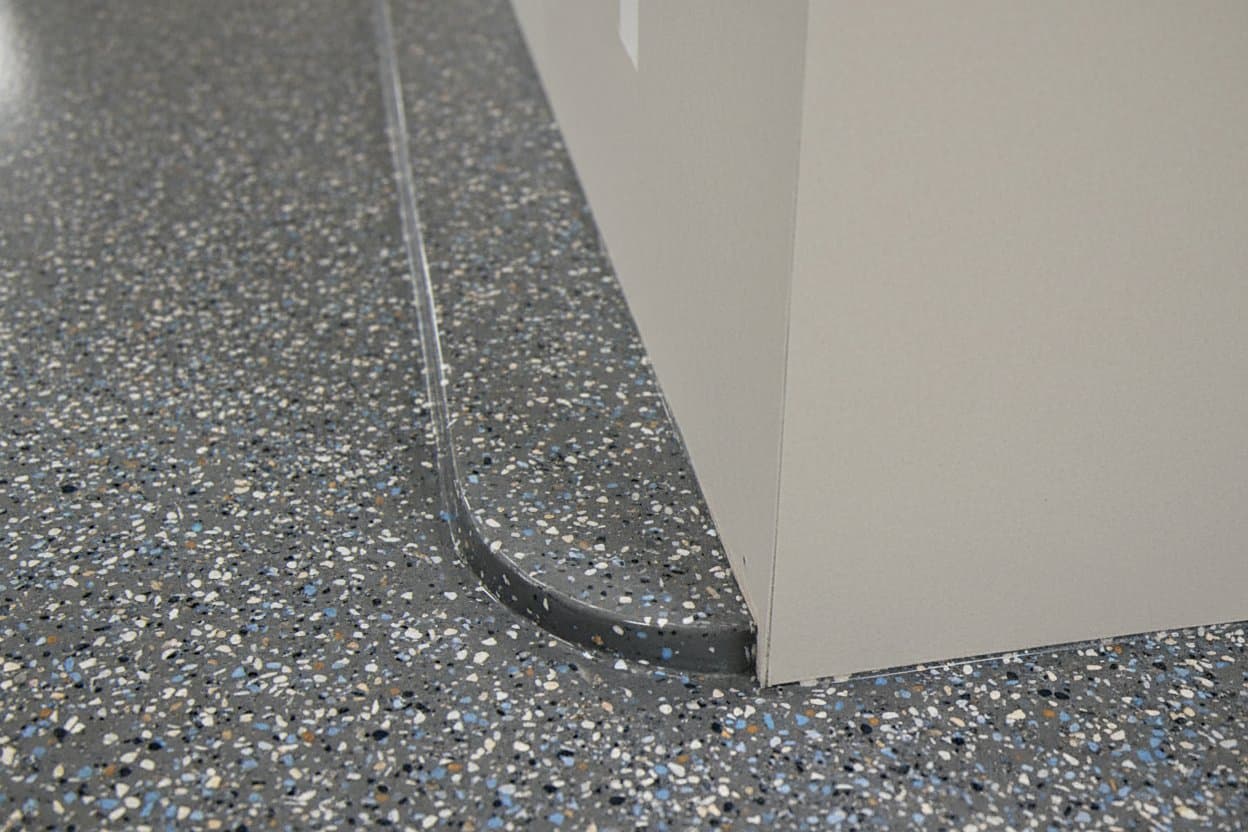
Flake coverage at floor edge.
Garage with complete flake epoxy coating.
What about the alternatives?

Flake measured against the other home finishes

People finish a garage floor a lot of ways, and flake is the one most owners land on once they see the options. Some picks look flat, some peel, and some cost more effort than the room needs. Here is how the common choices stack up on a Farmington Hills garage.

Solid color epoxy

A clean, even color that wears well, but it shows every scuff and tire mark with nothing to hide them.

Acceptable

Sparse decorative speckle

A light dusting of chips over the base. It looks thin and patchy, and the bare spots still show the flaws.

Skip

Full flake broadcast

Chips thrown to rejection for edge to edge cover. This is the look most owners want, and the one we pour most.

Recommended

Quartz broadcast (vinyl alternative)

Mineral quartz instead of vinyl chips. It is tougher and grippier, though it costs more and runs to a coarser feel underfoot.

Acceptable

Metallic epoxy

A poured swirl with real depth for a show floor, but it hides less and asks for more care than a flake garage.

Recommended
How it goes

From quote to walk-on, fast.

01

Free walk-through

02

Prep the slab

03

Coat and broadcast

04

Polyaspartic topcoat

Before you book

Worth confirming before signing a flake quote

Before you sign with anyone on a flake floor, these questions tell you whether it is going on right.

Will the blend look dated in a decade?
A neutral chip blend ages well, the same way a gray or tan floor does. The bold, busy blends are the ones that start to look tied to a year. We steer most owners toward a balanced flake mix of grays, tans, and a little black, since that reads clean for a long time. You pick it in person, and we show you how each blend looks in your own garage light before we throw a single chip.
Can the blend be matched to cabinets or wall paint?
Yes, within reason. We bring real chip samples and hold them against your cabinets, walls, and door before we mix the floor. Flake comes in set chip colors, so we blend them to land close to your palette rather than print a custom match. Most owners find a combination that ties the floor to the room in a few minutes. We do that part in your space, in the real light, not from a screen.
Is the loose chip layer a problem during cure?
No, that loose layer is normal and it is part of the process. When we throw to rejection, more chips land than the base can hold, so the extra sits loose on top while the floor cures overnight. The next morning we scrape and sweep all of it up before the topcoat goes down. What stays is the flake bed that seated into the wet base, and that is the layer we seal.
Will the chip hide existing slab cracks?
It hides the small stuff well. Hairline cracks, old stains, and tire ghosts disappear under a full flake bed and its busy pattern. A wide structural crack is different, and we do not paint over those. We chase them open, fill them with a patch, and grind the floor flat first. That way the repair holds and the flake lays even on top of it.
What if the color needs to change in a decade?
You are not locked in for good. The flake and base stay put, but we can scuff the floor, lay a fresh base and new chips over a section, and reseal it. More often, owners just want the shine back, and that is a scuff and a new clear coat, not a full redo. We walk you through what a refresh looks like before you ever commit to a color.
Aftercare

What daily life with a flake floor looks like

A flake floor is easy to live with, and most of the upkeep is just keeping grit off it. Loose sand and salt act like sandpaper under a tire, so sweep them out when they build up. Wipe spills before they sit, and rinse road salt off through the winter. The textured surface hides dirt between cleanings better than a smooth floor does, so it always looks tidier than it is. Do that much and the floor stays bright and tight for a long time.

  • Sweep the floor when sand and salt build up, before tires grind it in.
  • Hose or wipe winter road salt off so it does not sit on the seal.
  • Blot oil and spills off the chips early, before they dry into the texture.
  • Damp mop a couple times a year with mild soap and a soft head.
  • Slide felt pads under jacks, stands, and shelving so they do not gouge.
Dense charcoal vinyl flake epoxy finish.
FAQ

Frequent questions about flake floors

Do you do the work yourselves, or hand it to a sub?
We do it ourselves. No middleman, no sub. The same crew that walks your slab, reads the concrete, and maps the prep plan is the crew that grinds it, lays each coat, and cleans up before the day ends. When you call, you reach the people holding the grinder, not a dispatcher. One clear date. One crew from the first look to the last inspection.
What separates epoxy from polyaspartic, in practice?
Two different materials, two different jobs. Epoxy is the thick, pigmented base that bonds to the bare concrete after grinding and carries the whole coating system. Without that primer laid on an open slab, nothing above it sticks for long. Polyaspartic goes on top. It is the hard, clear finish that shrugs off road salt, hot tires, and the daily abuse a working garage floor takes every winter. We run both on most floors.
How are coating jobs typically priced in this market?
It depends on the slab. We walk the space first, then price it, because the square footage, the condition of the concrete, and which coating system you choose all change what the job costs. A flat, clean garage with no cracks is straightforward. A basement that needs moisture testing, crack repair, and a specialty primer before any color goes down is a different scope entirely. We hand you a written quote before any work starts. No guessing.
Are winter installs realistic in southeast Michigan?
Yes. All of the work happens inside your garage, not outside, so the outdoor temperature does not matter as long as we can hold the cure temperature steady in the enclosed space. We bring heaters. A January install cures just as hard as a summer job when the ambient air stays in the right range. Bare cold concrete with no heat source is the only thing that stops a floor from setting right.
Will the floor pick up or stain under hot tires?
Not with the right top coat. Hot tires pull at a clear layer that has not fully cured and lift it right off the base, and that is how most cheap epoxy jobs fail by year two. We seal every floor under polyaspartic, which cures hard and stays hard in the heat coming off a tire fresh from the road. It wipes clean. Oil, salt, and brake fluid sit on the surface instead of soaking in.
Ready when you are

Ready for a real Farmington Hills floor?

Send a few photos or book a free 15-minute on-site walk-through. A fixed written quote within one business day.

Get a free quoteCall (947) 224-7175
CallFree Quote