
Polyaspartic Epoxy Coatings · Farmington Hills

Polyaspartic Epoxy Coatings for Farmington Hills, MI Floors

We roll a clear polyaspartic topcoat over your epoxy floor, and most jobs are back in use the next day.

1 day installs · typical timeline
Free Quote

Free Polyaspartic Epoxy Coatings quote.

We reply within 1 business hour. No spam, ever.

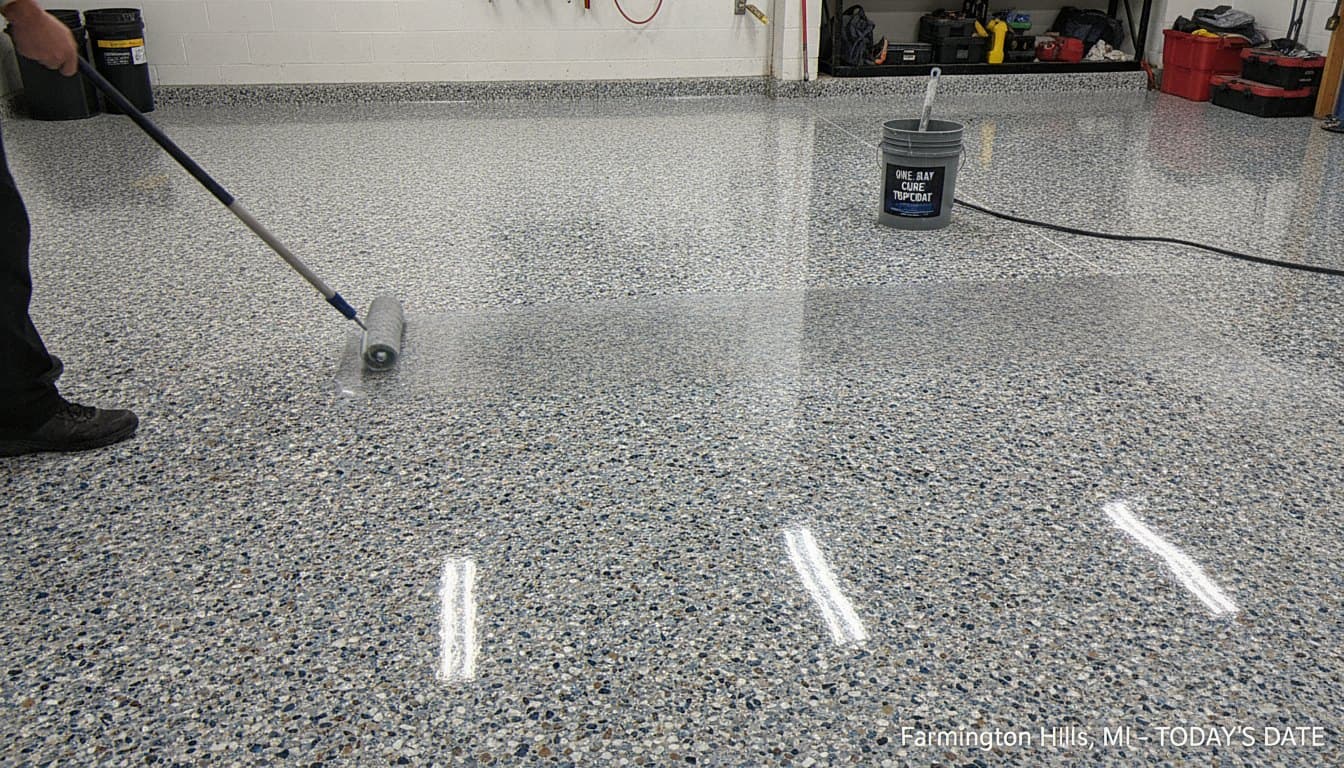
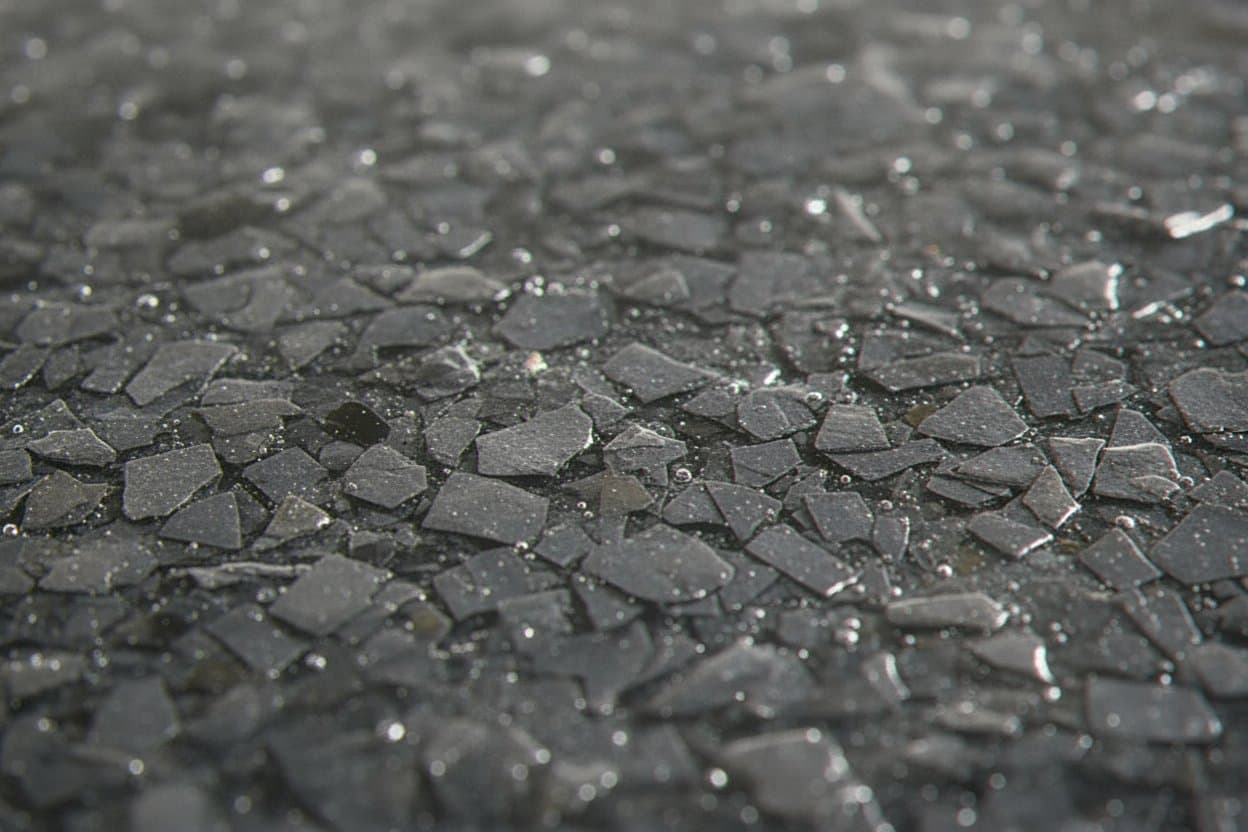
Clear topcoat over vinyl flake epoxy.
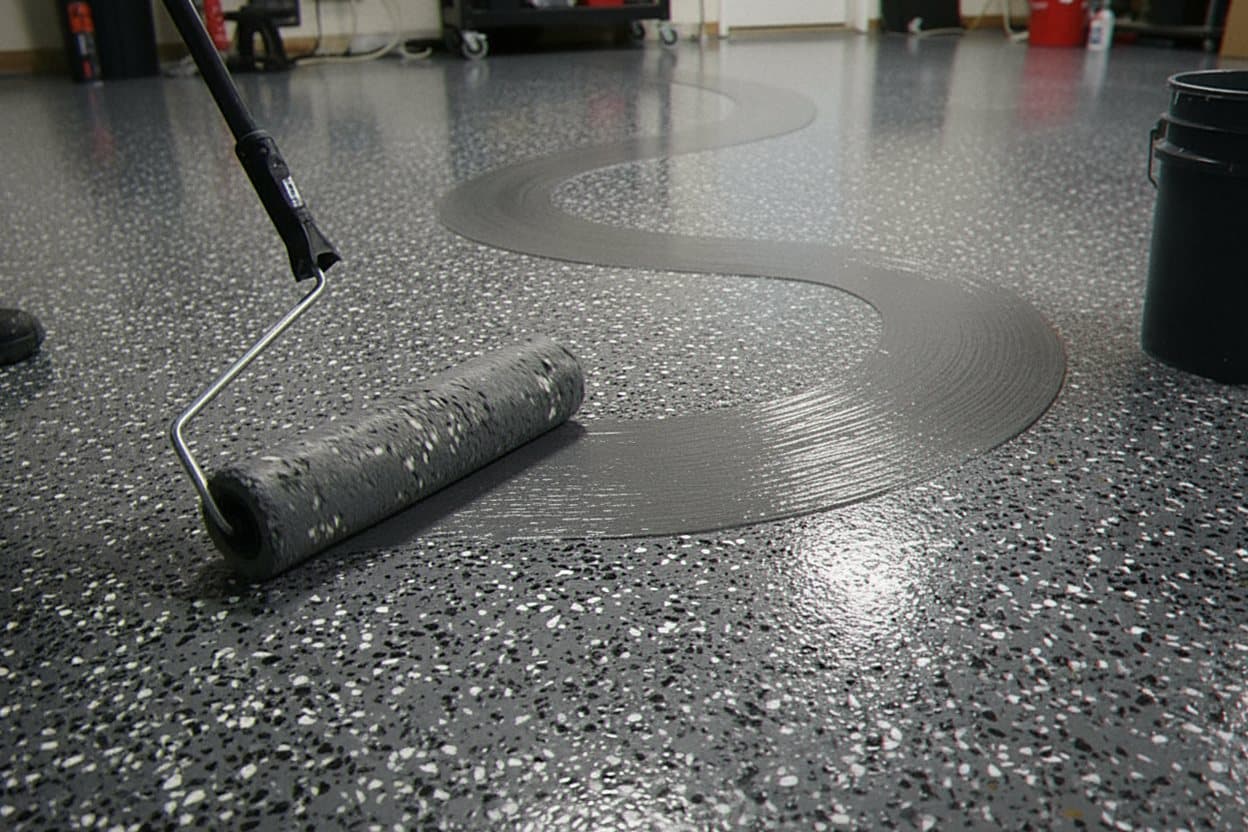
Polyaspartic being rolled over epoxy base.
Cured polyaspartic protecting flake underneath.
What we install

Polyaspartic and epoxy are not the same product

When people look for epoxy flooring Farmington Hills crews can stand behind, the topcoat matters as much as the base does, because the base grips while the top layer takes the daily beating. A fresh floor looks great on day one. Then the seasons hit. Give it a few hot summers, the road salt we track in all winter, and long hours of sun through an open garage door, and a bare surface can slowly dull, chalk, or lift at the edges. A clear polyaspartic coat closes that gap. We pour the epoxy base, and then we seal the whole thing under a tough top layer that is built to take years of wear without going dull.

Polyaspartic is a fast curing resin that we roll on as the final clear coat, and it behaves nothing like a thicker layer of epoxy. It is its own thing. The chemistry is different, and so is the way it wears under tires and sun. We start with a ground and primed slab, lay the epoxy base, broadcast the color flake while that base is still wet, and finish with the clear polyaspartic seal. Each coat goes down inside a set window. Hit those windows, and the layers lock together and cure as one solid floor instead of a stack of skins that can peel apart later.

  • Cures fast, so most floors are back in use the next day.
  • Stays clear in sunlight instead of turning yellow over time.
  • Takes hot tires, road salt, and dropped tools without lifting.
  • Bonds chemically with the epoxy underneath. No weak plane between the layers.
  • Goes on thin and even, so the flake and color stay sharp.
The base does the gripping. The topcoat does the surviving. Polyaspartic is the part that takes the years.

We work on garages and floors right here in Farmington Hills, so we plan every job around the weather we actually get, from the deep cold snaps of January to the damp, swampy mornings that hang around all spring. That matters. Cold air, road salt, and trapped moisture all change how a coat is mixed and laid. So we read the slab first, check the forecast, and pick a setup that fits the day in front of us. When you call, you reach the same crew that shows up to grind, pour, and seal the floor. You talk to the people doing the work, and you get a clear date and a clean floor.

If you want a floor that stays clear and takes the wear, a polyaspartic topcoat is the move. Call or send a message, and we will set a date and walk you through the plan. We do the work ourselves, start to finish.
Materials

The chemistry, briefly, with no marketing fluff

Polyaspartic comes from a different resin family than epoxy, and that drives every choice we make on the floor. The short version is simple. It cures fast and shrugs off sunlight that would yellow a lesser coat over a few summers. Epoxy gives us a thick, strong base that bites into the slab and holds. Polyaspartic gives us a clear, tough skin on top. Used together, the way we build them, you get the heavy body of the one and the bright, weatherproof wear of the other in a single floor.

We roll the coat on thin and measure the film in mils as we go, never by eye. Too little, and it wears out early. Too much, and it can cloud, bubble, or trap a haze you cannot fix later. The right film stays clear, shrugs off the abuse, and lets every fleck of flake show through with depth. That balance is the entire job. It is why one of us is always watching the thickness on every single pass across the slab.

  • Resin backbone keeps the film clear in daylight instead of yellowing.
  • Goes down in mils, so we measure the film on every pass.
  • Cures fast enough that the floor is back in use the next day.
  • Cures harder than industrial floor sealer, which is what defeats tire pickup.
Topcoat applied to flake edge.
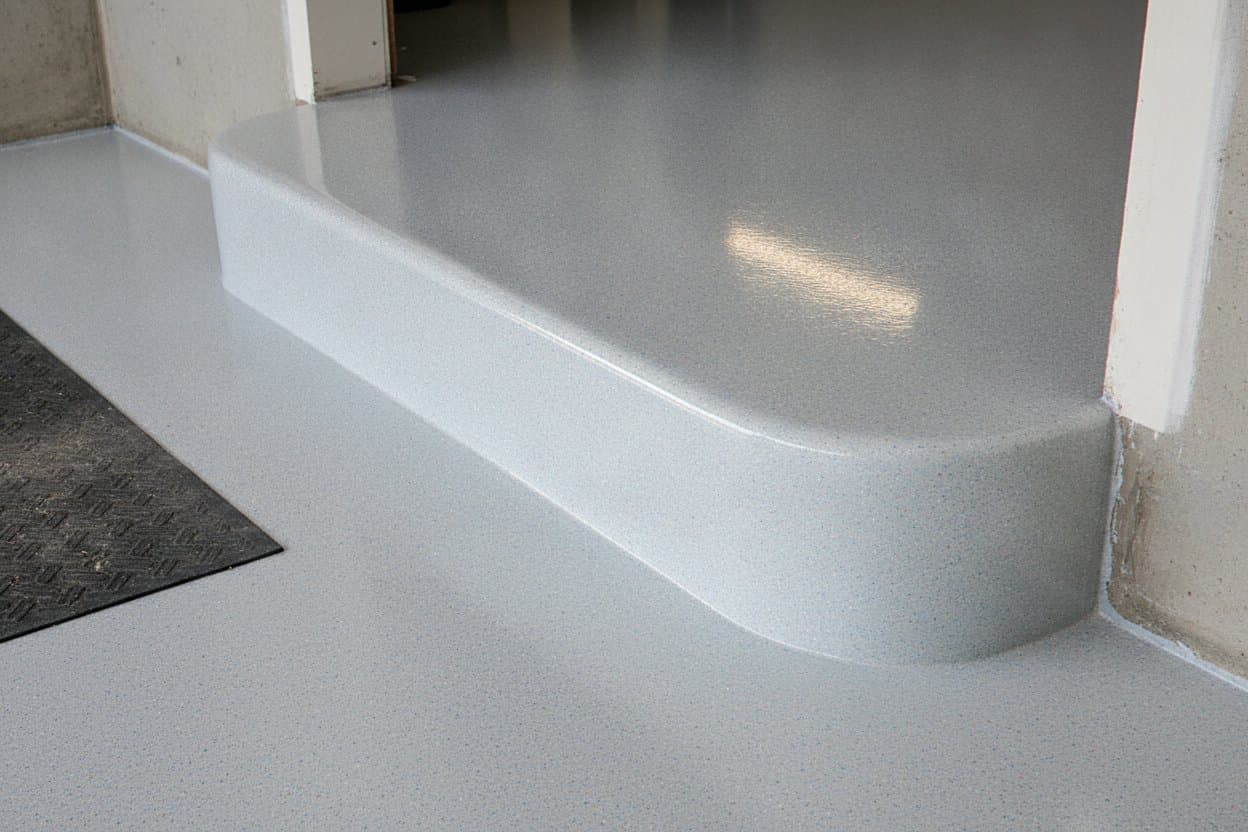
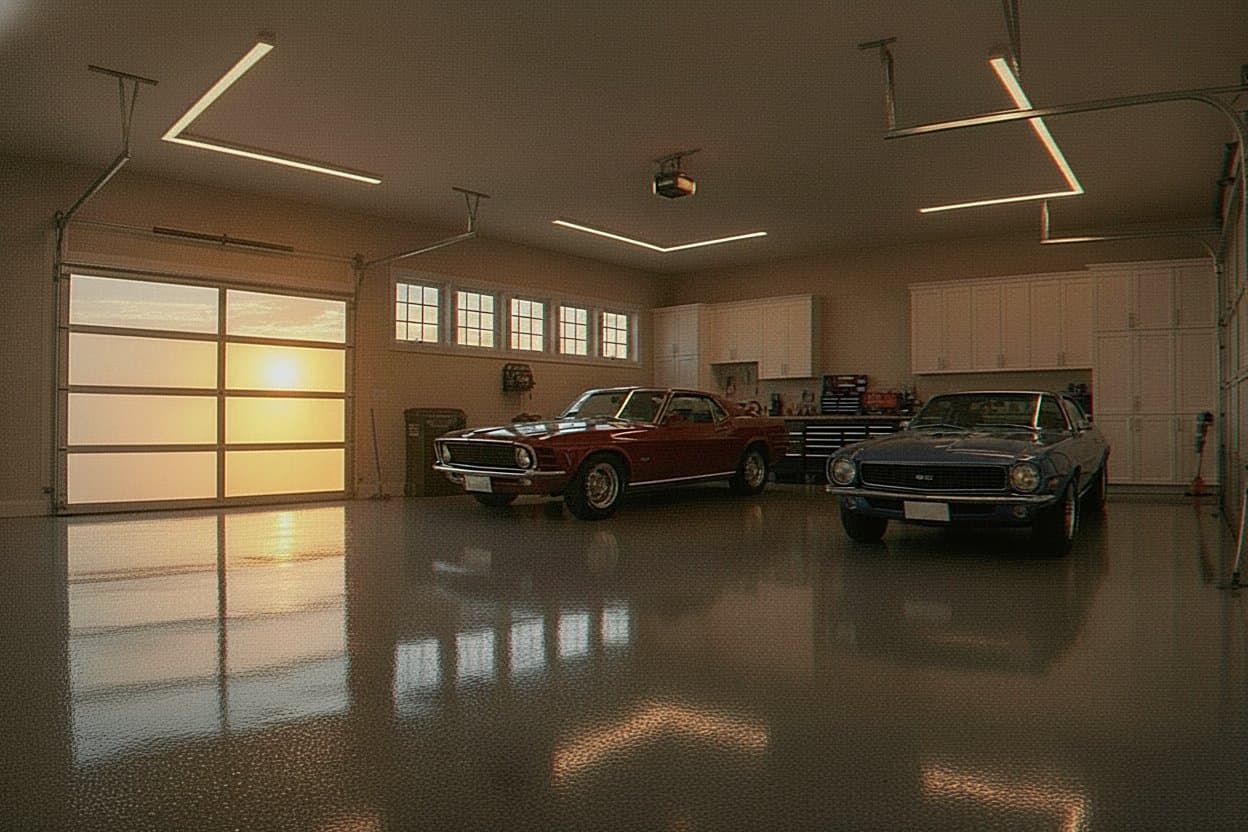
Garage with gloss polyaspartic finish.
What about the alternatives?

Polyaspartic versus the other topcoat candidates

A topcoat has one job. It needs to protect the floor and stay clear while it does. Several products claim they can. Here is how the common picks hold up on a Farmington Hills garage.

Clear epoxy as a topcoat

It is strong, but it yellows in sunlight and wears faster than a true topcoat. We skip it on top.

Skip

Solvent based polyurethane

Tough and clear, but the fumes are strong and it cures slow. It works, though we rarely reach for it.

Acceptable

Water based acrylic floor sealer

Cheap and easy, yet thin. It buys a year or two, then needs another pass. Fine as a short fix.

Acceptable

Urethane mortar

Built for hard shop and kitchen use. Great where the floor takes a beating, but heavy for a home garage.

Recommended

Polyaspartic

Clear, fast, and tough. It stays bright in sun and takes the daily wear. This is our pick on most floors.

Recommended
How it goes

From quote to walk-on, fast.

01

Free walk-through

02

Prep the slab

03

Coat and broadcast

04

Polyaspartic topcoat

Before you book

What to confirm about the polyaspartic pass before booking

Before you book, here are the questions worth asking so you know the coat is going on right.

What temperature and humidity will the install run at?
Polyaspartic cures fast, and heat and damp air speed it up even more. We check the forecast and the slab before we mix. If the air is too warm or too wet, we adjust the blend or shift the start time. That keeps the coat from setting before we can spread it.
How much polyaspartic is going on the floor, in mils?
We measure the film as we roll, not by eye. Too thin and it wears early. Too thick and it can cloud or bubble. We aim for the range the resin is built for, and we check it on each pass.
Is the polyaspartic landing inside the epoxy's recoat window?
Each coat has a window where the next one bonds best. We lay the topcoat while the base is still in that window. Hit it, and the layers lock as one floor. Miss it, and you risk a weak line between them, so we plan the day around it.
Are there cases where polyaspartic is the wrong topcoat?
Yes. On a slab with heavy moisture coming up through it, we fix that first. On some shop floors, a urethane mortar fits better. We tell you straight when another setup is the smarter call.
Can the topcoat be refreshed later without ripping the floor out?
In most cases, yes. We scuff the old coat, clean it well, and roll a fresh layer on top. The base and flake stay put. That brings the shine back without tearing the whole floor out.
Aftercare

How a polyaspartic floor ages across the years

A polyaspartic floor is easy to live with, and most of what little upkeep it needs comes down to one habit, which is keeping loose grit from grinding into the clear coat under foot and tire. Sweep it. Dust mop it when you see dirt, and wipe up spills before they sit and stain. Once or twice a year, give the whole slab a real wash with a soft mop and a mild soap, working from the back of the garage toward the door. Do that much, and the floor stays bright and clear for a very long time.

  • Sweep or dust mop weekly so grit does not scratch the surface.
  • Wipe oil, salt, and spills soon, before they dry in place.
  • Wash with a soft mop and mild soap a couple times a year.
  • Put felt pads under heavy gear so it does not gouge.
  • Skip harsh acids and steel pads, which can dull the clear coat.
Clear topcoat over vinyl flake epoxy.
FAQ

Common questions about polyaspartic in Farmington Hills

Do you do the work yourselves, or hand it to a sub?
We do it ourselves. No middleman, no sub. The same crew that walks your slab, reads the concrete, and maps the prep plan is the crew that grinds it, lays each coat, and cleans up before the day ends. When you call, you reach the people holding the grinder, not a dispatcher. One clear date. One crew from the first look to the last inspection.
What separates epoxy from polyaspartic, in practice?
Two different materials, two different jobs. Epoxy is the thick, pigmented base that bonds to the bare concrete after grinding and carries the whole coating system. Without that primer laid on an open slab, nothing above it sticks for long. Polyaspartic goes on top. It is the hard, clear finish that shrugs off road salt, hot tires, and the daily abuse a working garage floor takes every winter. We run both on most floors.
How are coating jobs typically priced in this market?
It depends on the slab. We walk the space first, then price it, because the square footage, the condition of the concrete, and which coating system you choose all change what the job costs. A flat, clean garage with no cracks is straightforward. A basement that needs moisture testing, crack repair, and a specialty primer before any color goes down is a different scope entirely. We hand you a written quote before any work starts. No guessing.
Are winter installs realistic in southeast Michigan?
Yes. All of the work happens inside your garage, not outside, so the outdoor temperature does not matter as long as we can hold the cure temperature steady in the enclosed space. We bring heaters. A January install cures just as hard as a summer job when the ambient air stays in the right range. Bare cold concrete with no heat source is the only thing that stops a floor from setting right.
Will the floor pick up or stain under hot tires?
Not with the right top coat. Hot tires pull at a clear layer that has not fully cured and lift it right off the base, and that is how most cheap epoxy jobs fail by year two. We seal every floor under polyaspartic, which cures hard and stays hard in the heat coming off a tire fresh from the road. It wipes clean. Oil, salt, and brake fluid sit on the surface instead of soaking in.
Ready when you are

Ready for a real Farmington Hills floor?

Send a few photos or book a free 15-minute on-site walk-through. A fixed written quote within one business day.

Get a free quoteCall (947) 224-7175
CallFree Quote