
Garage Floor Epoxy · Farmington Hills

Garage Floor Epoxy in Farmington Hills, MI

We grind the slab, build the garage floor epoxy in four passes, lock it under a clear polyaspartic, and you roll the car back in about a day.

1 day installs · typical timeline
Free Quote

Free Garage Floor Epoxy quote.

We reply within 1 business hour. No spam, ever.

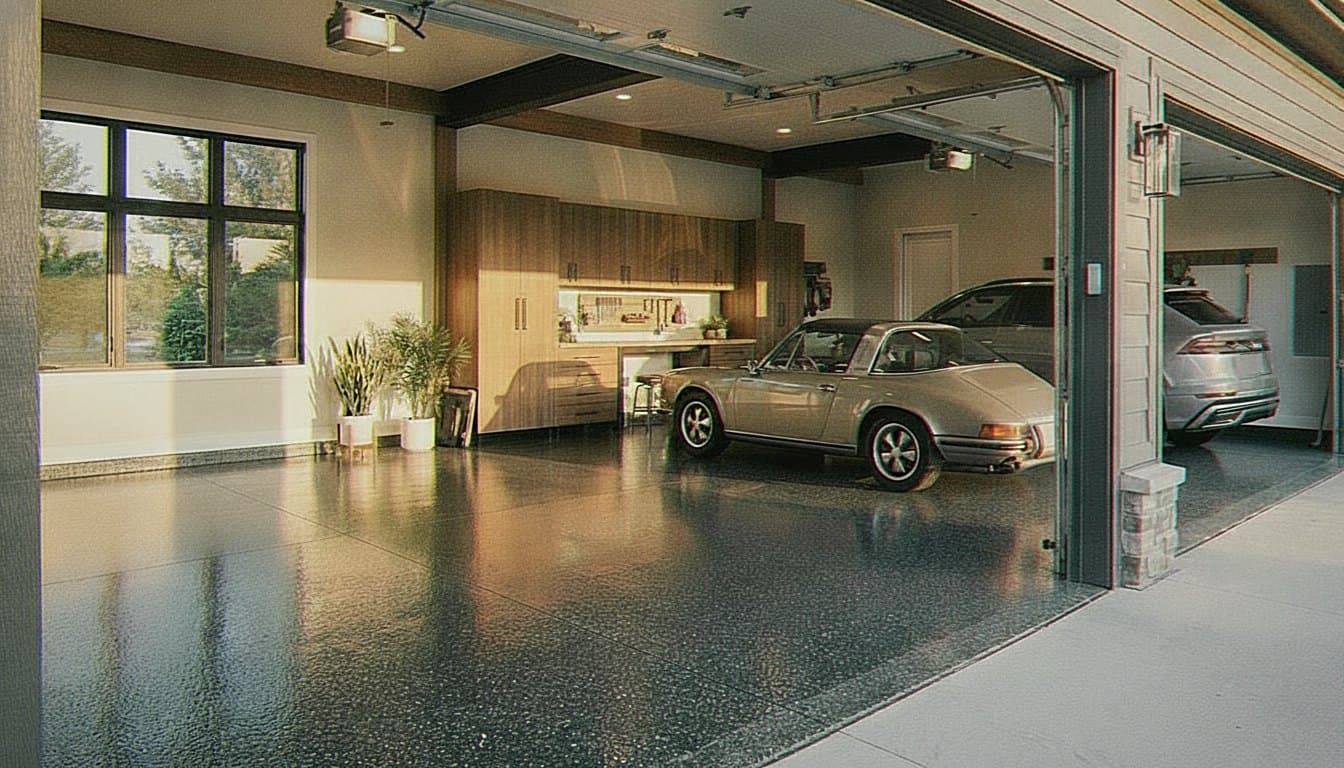
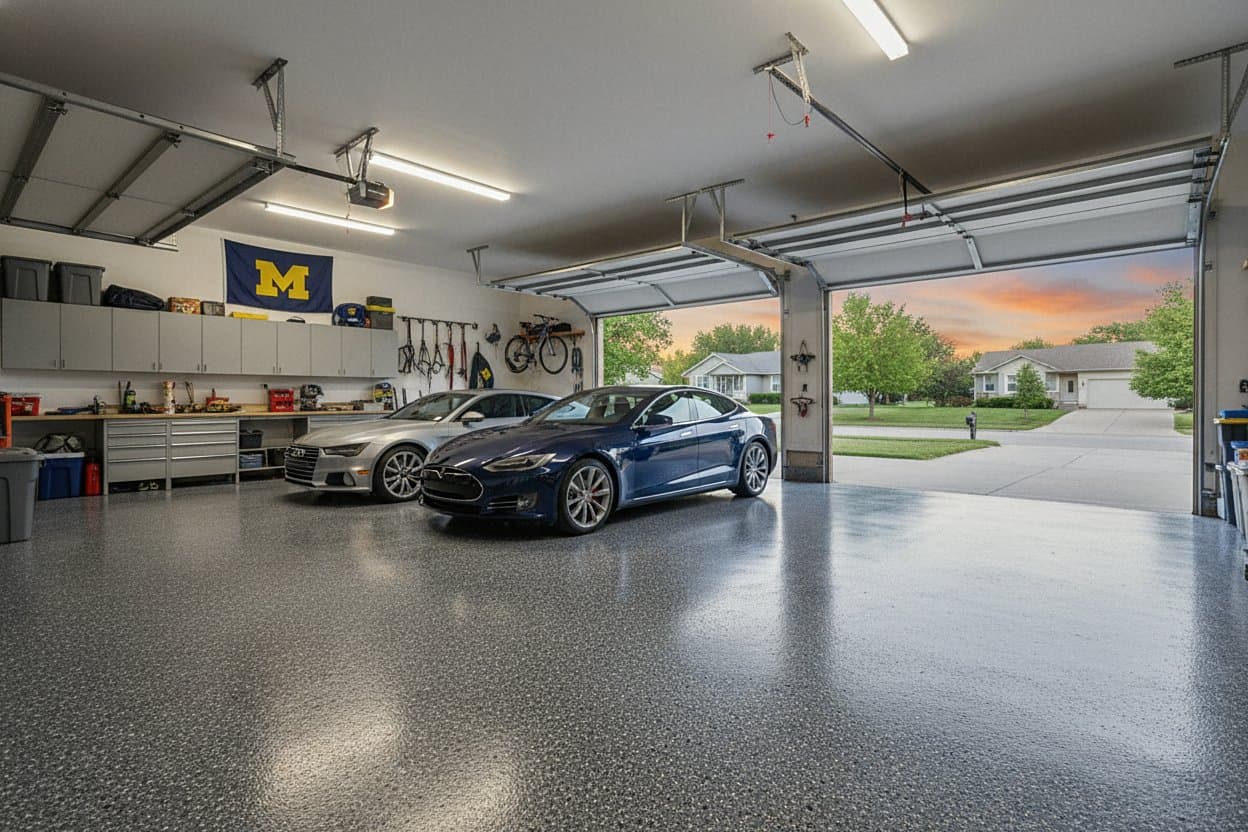
Polished charcoal flake epoxy garage floor.
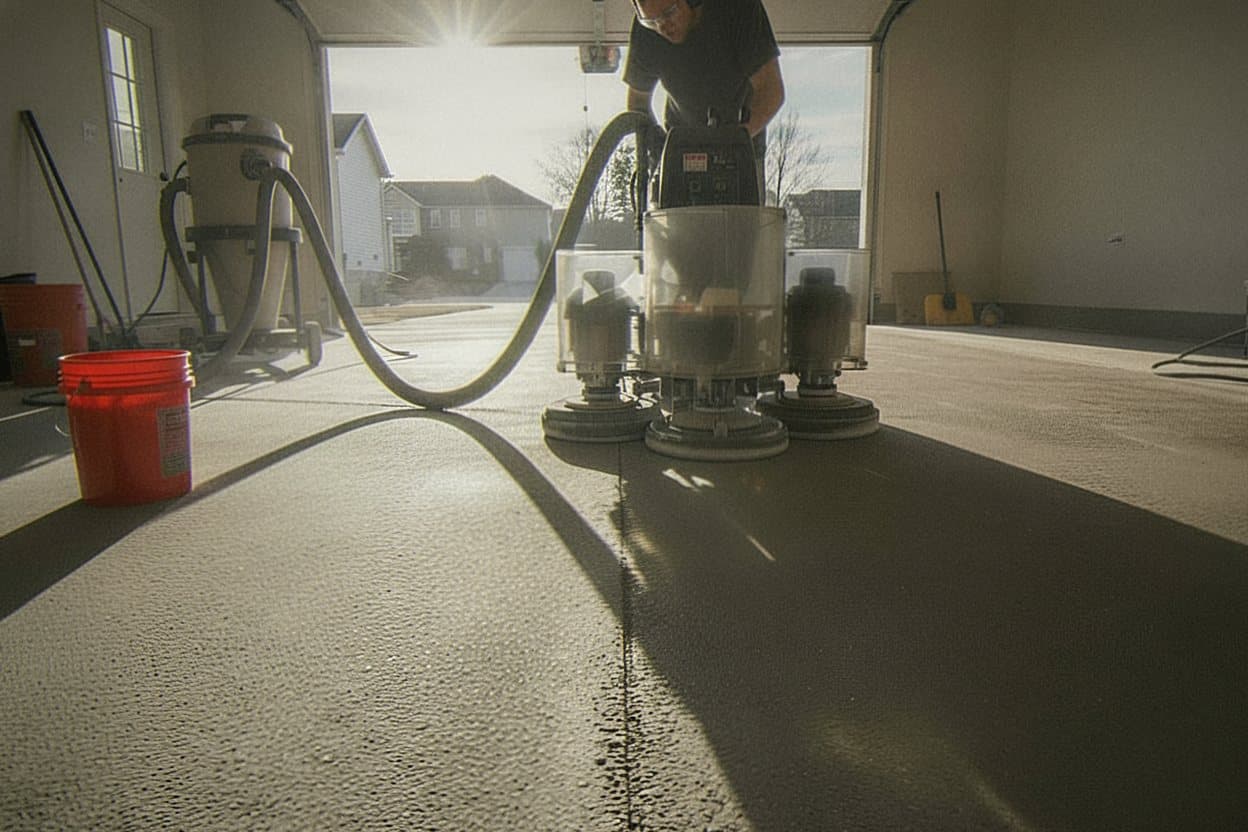
Concrete slab being opened with grinder.
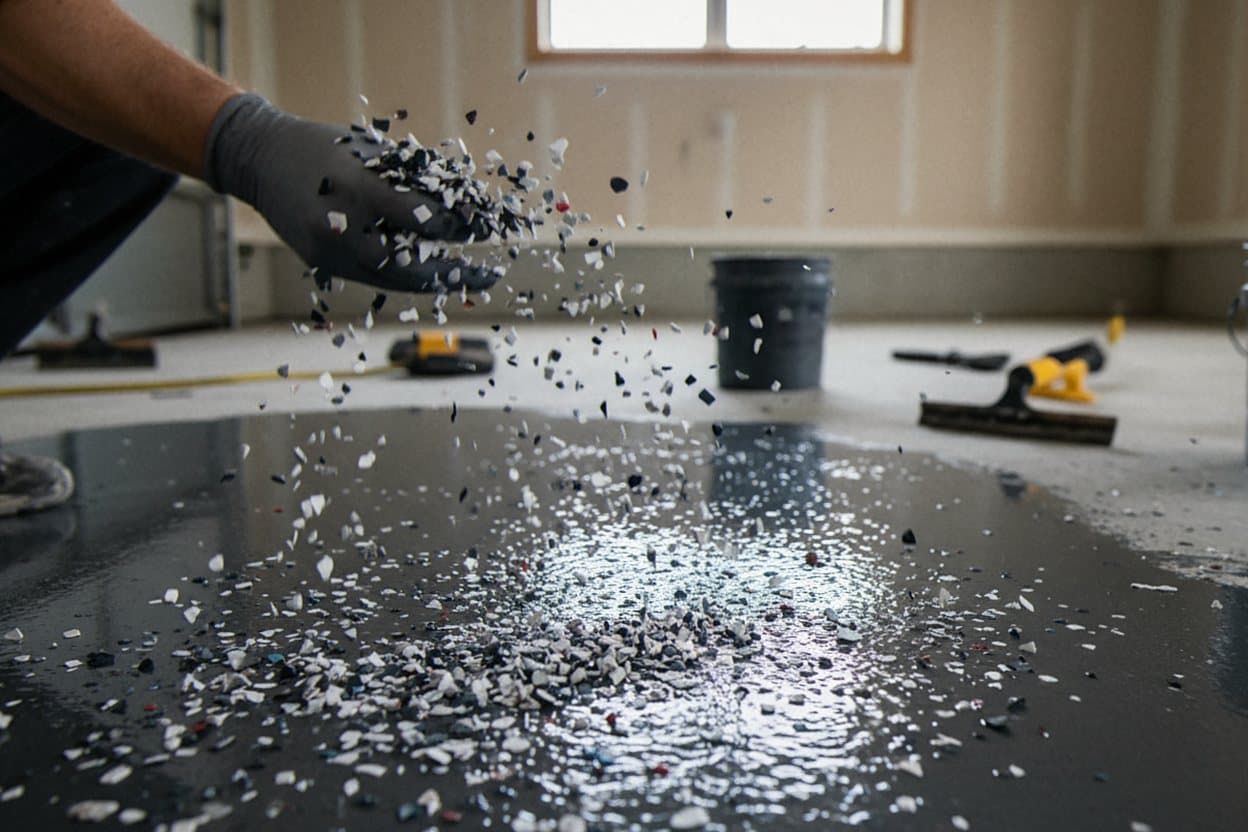
Vinyl flakes broadcast onto wet epoxy.
What we install

What it takes to coat a garage floor that lasts

Park in a Farmington Hills garage through one winter and the floor tells the story. Slush drips off the fenders, the salt dries into pale rings, and oil works into every open pore in the concrete. Bare concrete drinks all of it. Garage floor epoxy stops that, because it caps the slab with a hard shell that rinses clean instead of soaking up the mess. The part most people miss is that the concrete itself is seldom what fails. A coating peels when the crew rushed the prep or picked the wrong mix for that slab, so we read the floor first, the same way we do before any basement floor epoxy job.

The garage floor epoxy build is four coats laid over a slab we open with a diamond grinder. That grinder cuts a rough tooth into the concrete so the first coat can bite and stay put. A primer goes down first and sinks into the fresh profile. Next comes a colored base coat, and while it is still wet we cast vinyl flake across the whole floor by hand until the surface will not take any more. The next day a clear polyaspartic seals all of it. Each coat carries its own job, and each one has to cure inside a set window before the next can follow.

  • Our crew coats a two car garage in a single working day.
  • Cars roll back onto the floor about a day after the topcoat.
  • The flake bed adds grip when wet boots track snow off the driveway.
  • It shrugs off salt brine, motor oil, brake fluid, and the stray antifreeze drip.
  • We work indoors and run heaters, so the cure holds steady through January.
Most floors do not fail at the concrete. They fail at the prep, and prep is where we spend our time.

We lay garage floor epoxy across Farmington Hills and the rest of Oakland County, so we plan every job around the winters we actually work in. The cold sits late into spring here, and the salt trucks run for months. The whole job happens inside, so we bring our own heat and hold the slab warm even when snow drifts against the door. Call us and you reach the same people who show up to grind, prime, and seal. You talk to the crew doing the work, you get a firm date, and you get the kind of epoxy flooring Farmington Hills owners come back to.

If you want a garage floor that takes the salt and wipes clean, a full epoxy build under polyaspartic is the way to get there. Call us or send a couple photos of your slab, and we will lock in a date and walk you through the plan. We do the whole job ourselves, from the first pass with the grinder to the last coat of garage floor epoxy.
Materials

What each coat does and why it is there

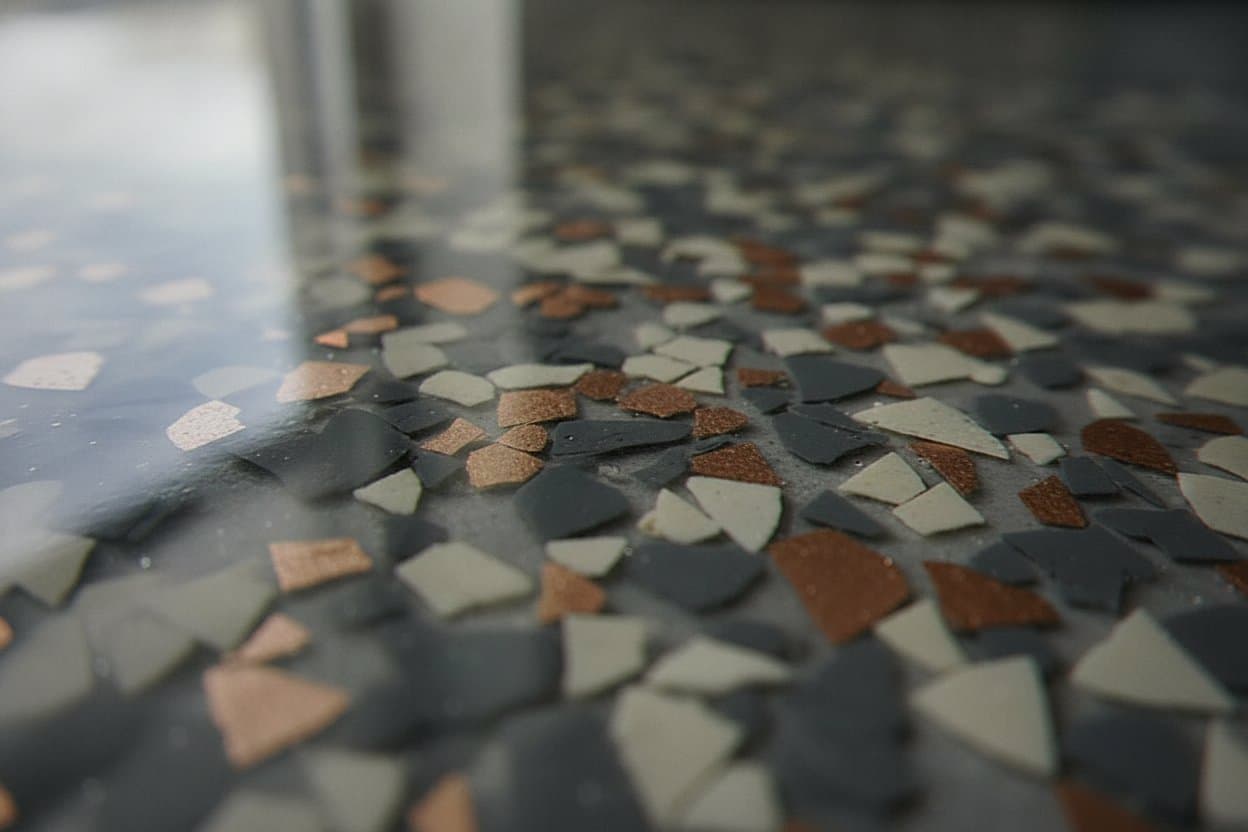
The four coats are not four versions of one thing. Each has a separate job, and the floor only holds when all of them are right. The primer is a thin resin that soaks into the ground concrete and gives the next coat a grip. The base coat brings the color and lays down the body of the floor. The flake is colored vinyl chip we throw into that wet base, where it beds in under its own weight. Over everything goes the polyaspartic, the clear layer that eats the daily wear.

Sequence matters as much as the parts. We grind first, because a smooth slab sheds a coating the way a window sheds a sticker. Then we prime, lay the base, broadcast the flake, and seal, and every layer has to cure inside its own window before the next one lands. Hit those windows and the coats knit into one solid floor. Miss them and you get a stack of thin skins that can lift apart down the road, which is how the bargain jobs come undone.

  • The primer sinks into ground concrete first, so the floor grabs and holds.
  • Vinyl flake beds into wet resin under its own weight, with no glue.
  • The polyaspartic topcoat takes the salt, the hot rubber, and the oil.
  • Four coats over a profiled slab: prime, base, flake, then seal.
Flake texture trapped under clear topcoat.
Two-car garage floor after epoxy coating.
What about the alternatives?

Other ways people try to dress up a slab

Homeowners reach for a handful of fixes to make a worn garage slab look better. A few buy a season, a few last for years, and a few peel before the next thaw. Here is how the usual picks hold up on a Farmington Hills garage.

Rolled on floor paint

Cheap to buy and quick to roll, but it grips poorly and peels off under warm tires within a season.

Skip

Snap together floor tiles

They cover a rough slab fast, though grit and salt grind into the seams and the surface flexes under weight.

Acceptable

Penetrating sealer

It soaks in and slows stains, yet it leaves the floor looking bare and does nothing to hide old damage.

Acceptable

Big box epoxy kit

The resin runs thin and the box tells you to skip the grind, so most of these coats lift inside a year.

Skip

Full epoxy under polyaspartic

Four coats fused over a ground slab. This is the build that handles the salt and holds for the long haul.

Recommended
How it goes

From quote to walk-on, fast.

01

Free walk-through

02

Prep the slab

03

Coat and broadcast

04

Polyaspartic topcoat

Before you book

Questions worth asking any installer first

Before you sign with anyone, these are the questions that tell you whether the floor is going down the right way.

How do you prep the bare concrete?
We grind it. A planetary diamond machine cuts a rough tooth into the slab so the coating keys in and locks down. Some crews wash the floor with acid instead, which barely roughs the surface and sets the coat up to peel. Ask to see the grinder, since the prep decides whether the floor lasts.
What do you do with the cracks already in the floor?
We open each crack up, clean it out, and pack it with a structural filler before the grinder ever flattens the slab. A crack left buried under fresh coating prints right back through the new surface within months. Filling it first keeps the top smooth and stops water from creeping in underneath.
Will it really stand up to hot tires?
Yes, as long as the topcoat is right. Hot rubber tugs at a soft clear coat and peels it loose, which is the classic way a cheap floor dies. We seal under polyaspartic, a coat that cures hard and laughs off the heat coming off a tire fresh in from Grand River Avenue.
How do we land on a color and flake blend?
You choose it before we start. We bring real flake samples and lay them out in your own garage light, since the same blend reads one way on a phone and another on your floor. Grays and charcoals bury tire marks. Warmer chips lift a dim space. The strength comes from the system under the chips, not the color you see.
When can I park on it again?
About a day after the topcoat goes down. You can step on the floor the evening we seal it, and the polyaspartic firms up fast enough that the car comes back the next day. We give you the exact times for your own job before we lift a tool.
Aftercare

Living with the floor for years

A finished garage floor asks for very little, and most of the upkeep comes down to keeping grit off it. Loose sand and salt act like sandpaper under a rolling tire, so push them out the door when they pile up. Mop up spills before they sit, and rinse the road salt away through the winter. Do that much and the floor stays bright and tight for a long stretch.

  • Push loose sand and salt out the door before tires grind it in.
  • Rinse road salt off the floor through the winter months.
  • Wipe oil, brake fluid, and other spills before they sit and stain.
  • Wash a couple times a year with a soft mop and mild soap.
  • Slip felt pads under jack stands and heavy shelves to stop gouges.
Polished charcoal flake epoxy garage floor.
FAQ

What Farmington Hills owners ask before they book

Do you do the work yourselves, or hand it to a sub?
We do it ourselves. No middleman, no sub. The same crew that walks your slab, reads the concrete, and maps the prep plan is the crew that grinds it, lays each coat, and cleans up before the day ends. When you call, you reach the people holding the grinder, not a dispatcher. One clear date. One crew from the first look to the last inspection.
What separates epoxy from polyaspartic, in practice?
Two different materials, two different jobs. Epoxy is the thick, pigmented base that bonds to the bare concrete after grinding and carries the whole coating system. Without that primer laid on an open slab, nothing above it sticks for long. Polyaspartic goes on top. It is the hard, clear finish that shrugs off road salt, hot tires, and the daily abuse a working garage floor takes every winter. We run both on most floors.
How are coating jobs typically priced in this market?
It depends on the slab. We walk the space first, then price it, because the square footage, the condition of the concrete, and which coating system you choose all change what the job costs. A flat, clean garage with no cracks is straightforward. A basement that needs moisture testing, crack repair, and a specialty primer before any color goes down is a different scope entirely. We hand you a written quote before any work starts. No guessing.
Are winter installs realistic in southeast Michigan?
Yes. All of the work happens inside your garage, not outside, so the outdoor temperature does not matter as long as we can hold the cure temperature steady in the enclosed space. We bring heaters. A January install cures just as hard as a summer job when the ambient air stays in the right range. Bare cold concrete with no heat source is the only thing that stops a floor from setting right.
Will the floor pick up or stain under hot tires?
Not with the right top coat. Hot tires pull at a clear layer that has not fully cured and lift it right off the base, and that is how most cheap epoxy jobs fail by year two. We seal every floor under polyaspartic, which cures hard and stays hard in the heat coming off a tire fresh from the road. It wipes clean. Oil, salt, and brake fluid sit on the surface instead of soaking in.
Ready when you are

Ready for a real Farmington Hills floor?

Send a few photos or book a free 15-minute on-site walk-through. A fixed written quote within one business day.

Get a free quoteCall (947) 224-7175
CallFree Quote